“Guilt, change, and tenderness”
Por Fernando Bertucci
The return to freedom after a long confinement can feel like waking up in a parallel universe. For the protagonist of this story, that initial shock is as powerful as the guilt he has carried for years. His reentry into the real world is not a triumph, but a passage filled with shadows, where every familiar object seems distorted by the passage of time and every close face is a reminder of how much life has changed without him. His past accompanies him like a persistent shadow, and rebuilding a broken identity becomes a task as heavy as it is necessary.
The bonds with those around him —a family marked by silences and friendships that grew in his absence— reveal that human relationships can be both a refuge and an open wound. His father, a distant yet affectionate figure, moves between clumsiness and longing, trying to draw closer without knowing whether he has the right to do so. His childhood friendships, though seemingly intact, show the distance between who they once were and who they are now. The protagonist finds himself trapped between his genuine desire to repair those connections and the fear of confirming that he may no longer fit anywhere.
The narrative insists on an essential idea: no one changes in isolation. But it also makes clear that the bonds capable of sustaining transformation require effort, patience, and a vulnerability that can be frightening. The protagonist strives to break his old patterns, even as they stalk him with the familiarity of an uncomfortable yet well-known home. Every decision feels like a test of endurance, an inner struggle between the responsibility to move forward and the temptation to abandon the fight.
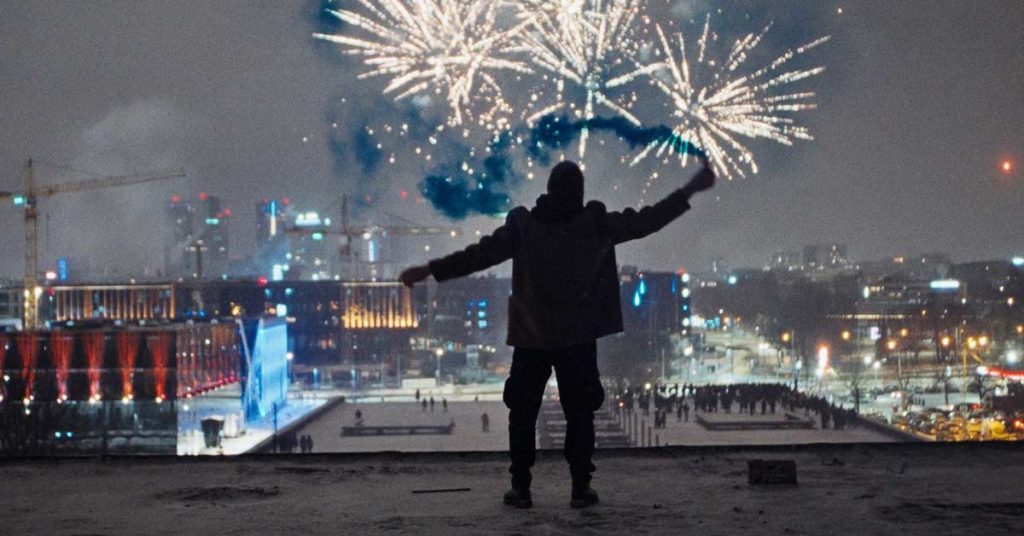
Amid the cold that dominates the landscape, small flashes of warmth emerge to balance the tone. Occasional laughter, jokes that recall a more innocent past, naïve dreams of escaping to distant places—all of this introduces a soft humanity that contrasts with the harshness of his emotional conflict. Life, even in its darkest corners, always holds some gesture capable of rescuing us, for a moment, from despair. And it is in those seemingly insignificant moments where the film breathes, where it becomes deeply intimate.
The theme of forgiveness appears as the most powerful emotional core. Not social or familial forgiveness, which seem more attainable than the protagonist believes, but forgiveness of oneself. That is the barrier that hurts the most, the one that stands between him and any possibility of rebirth. Understanding that the past cannot be undone, but can be integrated, is a painful process that unfolds with delicacy and honesty, without melodrama or explicit speeches. The story trusts in silences, in looks that say more than words, in minimal gestures heavy with meaning.
Although the narrative suggests that the future may not be easy, it also offers a small spark of hope. The frozen landscape around him is not only a reflection of his inner confusion; it is also a space where light—faint but persistent—manages to filter through. The work suggests that even those who have lived through devastating experiences can find a way forward, as long as there is a willingness to look inward and the courage to accept help.
In this way, Mo Papa becomes an intimate reflection on guilt, human fragility, and the possibility of a new beginning. A contained yet profound story that invites us to look closely at the wounds we all carry and to recognize that, despite them, there is always room to rebuild ourselves.