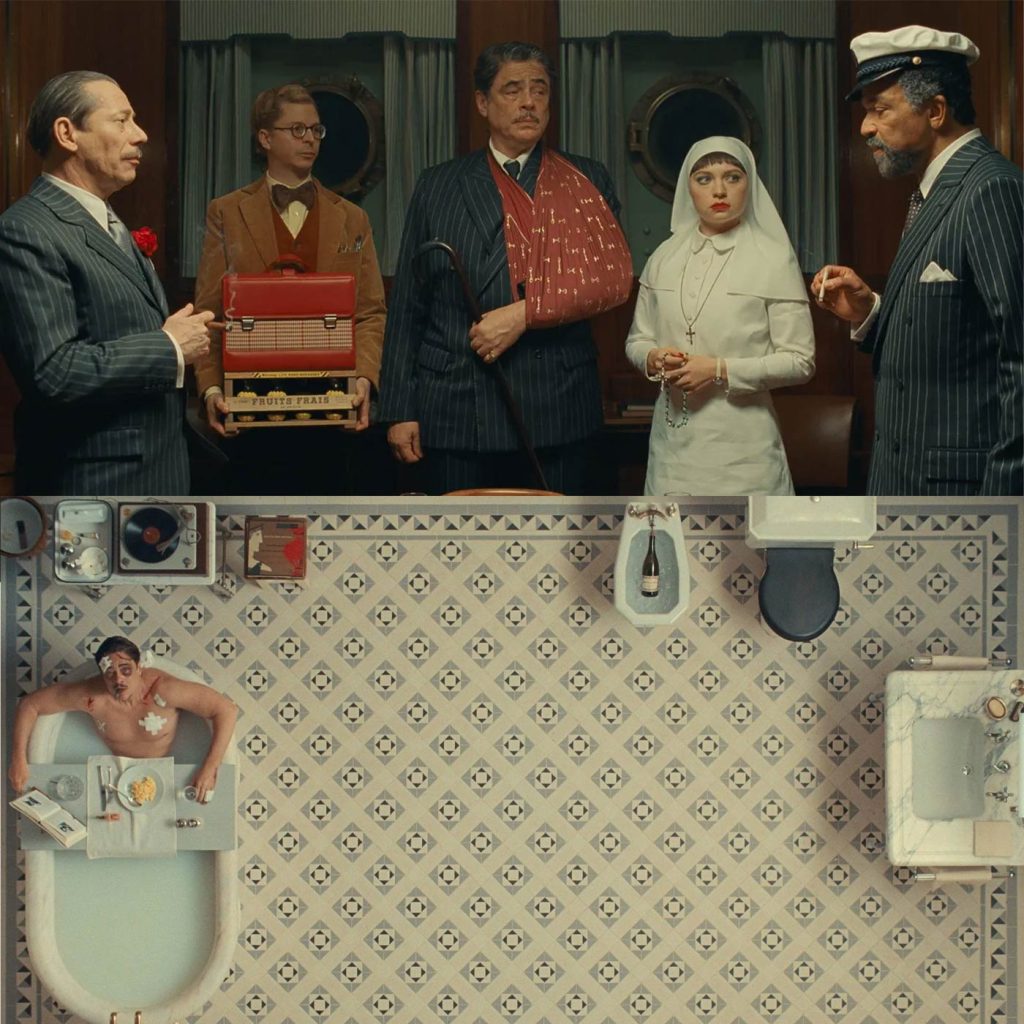
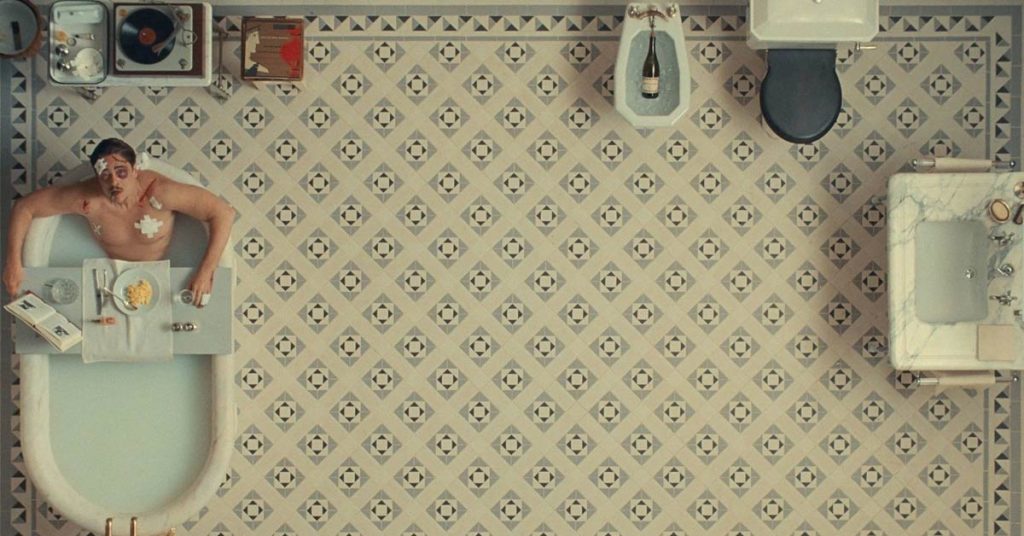
Wes Anderson has built a career sustained by an instantly recognizable aesthetic: obsessive symmetries, pastel colors that turn into an emotional palette, characters who speak with unflappable deadpan, and a melancholy irony that permeates every story. However, with The Phoenician Scheme, the inevitable question can no longer be avoided: is his style a motor in expansion or a mechanism that has begun to spin in circles without a clear direction? The film opens with a display of physical comedy and absurd energy—the businessman Zsa-Zsa Korda (a hieratic and perversely funny Benicio del Toro) survives his sixth plane crash in a sequence as delirious as it is gratuitous—that suggests Anderson has allowed himself to shoot his lightest comedy. And although it is true that this is one of his most outlandish films, filled with visual gags and cartoonish exaggerations, it also ventures into more biblical and bureaucratic terrain, attempting to speak about corruption, family ties, and the manipulation of the powerful. The problem is that it does so with such superficiality that the subtext dissipates like smoke: what could have been a weighty satire on politics, faith, and business is reduced to a masquerade in which form eclipses substance, something he was already criticized for in The French Dispatch but which here reaches a critical point.
The narrative framework confirms this sense of forced lightness. Zsa-Zsa Korda decides that his daughter Liesl, a chain-smoking nun played with poise by Mia Threapleton, should become his heir instead of his nine sons, adopted in part as a statistical experiment to produce a genius in the family. What follows is a journey of dealings with princes, tycoons, opportunistic cousins, and deranged uncles, during which he risks his life while negotiating contracts and dodging assassination attempts. The gallery of characters is as broad as it is excessive: Riz Ahmed, Tom Hanks, Bryan Cranston, Scarlett Johansson, Jeffrey Wright, Benedict Cumberbatch, Mathieu Amalric, Rupert Friend, and, of course, Bill Murray as God. The list seems designed more to fill a promotional poster than to sustain a coherent plot. While it is amusing to see Michael Cera steal scenes as a bumbling Norwegian tutor, or Cumberbatch go wild in a grotesque fratricidal duel, the predominant sensation is that the film mistakes accumulation for depth. Anderson seems more interested in choreographing absurd encounters and meticulous sets than in giving consistency to a narrative that sinks into its own mire.
Some viewers may find it fascinating that each assassination attempt against Korda leads to celestial black-and-white vignettes, with Murray, F. Murray Abraham, and Willem Dafoe playing capricious deities interrogating the magnate about his corrupt life. It is a visually attractive device, but it also exposes the lack of commitment to the subject: the critique of economic power and the meditation on the afterlife are reduced to stylized sketches that risk nothing. It is suggested that Korda, a hybrid of Onassis and Hughes, might embark on a redemption process by recognizing the limits of his brutal business practices, but Anderson never allows this line to grow, because the light comedy drags the film into inconsequence. The result is a work that seems to beg to be taken seriously and ridiculed at the same time, without ever achieving balance. If Asteroid City at least conveyed a sense of emotional density, here the anecdotal predominates, as if Anderson had chosen to make a pastiche of himself, trusting that style alone would suffice to conceal the fragility of the narrative structure.
That does not mean there are no flashes of what still makes Anderson a singular director. The visual display is impeccable: the sets are authentic dioramas in motion, the actors’ choreography integrates into a ballet of precision, and each shot could be hung in a contemporary art gallery. The comedy, at its best moments, recalls classic slapstick with a modern varnish, and there are passages in which laughter prevails even over the spectator’s incredulity. Moreover, the work of actors like Cera and Threapleton proves that Anderson can still find new ways to exploit his style: the former shines with physical humor unusual in the director’s filmography, and the latter embodies with conviction the clash between spirituality and capitalism that, in theory, sustains the film. However, these achievements seem like bright patches on a frayed tapestry, moments that stand out precisely because they contrast with the general sense that the story has been improvised along the way.