The French CNC turns 80, and its president is betting on a new boom in French cinema amid global changes
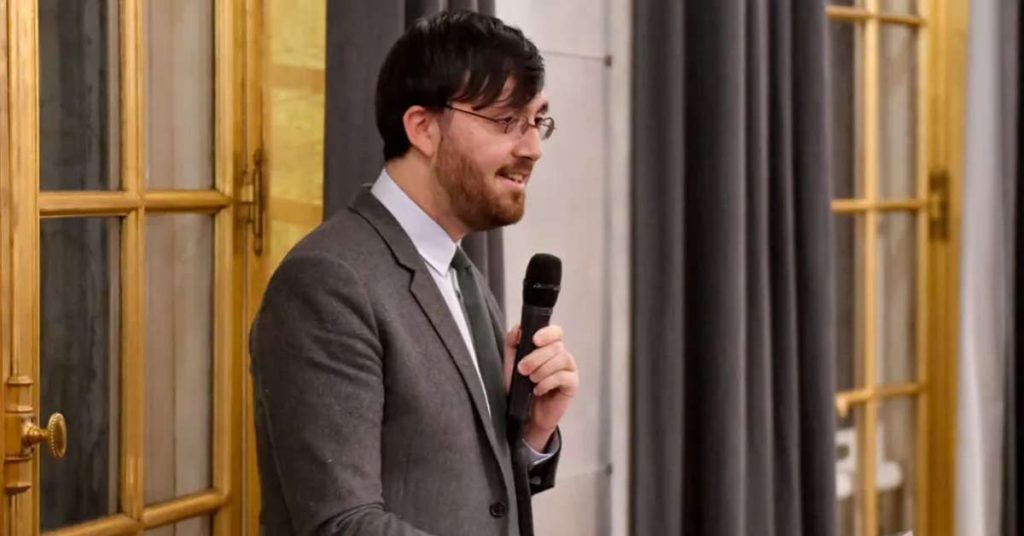
France’s National Centre for Cinema and the Moving Image (CNC) will celebrate its 80th anniversary in 2026 amid profound changes in the audiovisual industry and under unusually young leadership. Gaëtan Bruel, 37, the youngest president in the institution’s history, argues that the sector is at a decisive moment and that the French model could play a central role in the future of cinema.
The CNC, overseen by the Ministry of Culture but financially autonomous, distributes around €800 million a year in support funded through taxes on the audiovisual sector itself, from movie theaters to television networks and streaming platforms. According to Bruel, this system has sustained a robust ecosystem that goes beyond film production, including theaters, festivals, schools, and educational programs.
Since taking office in January 2025, the official has faced a complex context marked by domestic political pressure and structural transformations in the global market. In his view, the audiovisual world is undergoing a revolution comparable to the origins of cinema. “We are going through a moment as defining as the invention of cinema 130 years ago,” he said, pointing to simultaneous shifts in distribution models, the rise of artificial intelligence, and a new global balance of power in the industry.
Bruel warned that the growth of free social platforms and the possible emergence of AI-based interfaces capable of deciding what people watch could redefine cultural consumption. In that scenario, visibility becomes an existential challenge for creators and producers.
Even so, he remains optimistic about the role of movie theaters. “Cinema has become a bystander in the battle for attention. But it has not said its last word,” he said. For him, the key will be betting on creative singularity in the face of standardized digital content. “The audience’s message is unequivocal: while financiers push toward cheaper films and AI-driven productivity, viewers are asking for bold, distinctive works,” he argued. In that vein, he offered a definition that sums up his vision: “Auteur cinema could become the new mainstream, and France is leading that charge.”
The CNC anniversary also coincides with domestic political debates. In 2025, far-right representatives proposed abolishing the institution, questioning its role. Bruel defended it as a symbol of France’s cultural commitment and stressed that the system “doesn’t cost the state a single euro,” as it is funded by contributions from the audiovisual market itself. Still, he acknowledged a social contradiction: widespread support for cinema coexists with a lack of understanding of the model that sustains it. “People love going to the movies, but they ignore—or even criticize—the system that makes that experience possible,” he admitted.
One of the most sensitive issues remains the media chronology, the French system that regulates film release windows. The framework establishes exclusive periods for theaters, television, and platforms in order to ensure staged financing and promotion. Major U.S. companies, especially Netflix, have challenged this regulation. Bruel defended the model as key to cultural diversity and warned that without it the market could come to resemble music streaming, with immediate availability but less income for creators.
At the same time, he highlighted France’s growing appeal for international productions, driven by tax incentives and improvements in infrastructure. In his view, the country is consolidating its position as a global hub that combines local projects with international co-productions, with a strong presence at festivals and awards. For Bruel, the notion of “French cinema” no longer depends on the language or nationality of the cast, but on a production network that fosters works from diverse origins.