“The Poetics of Resistance”
Por Fernando Bertucci
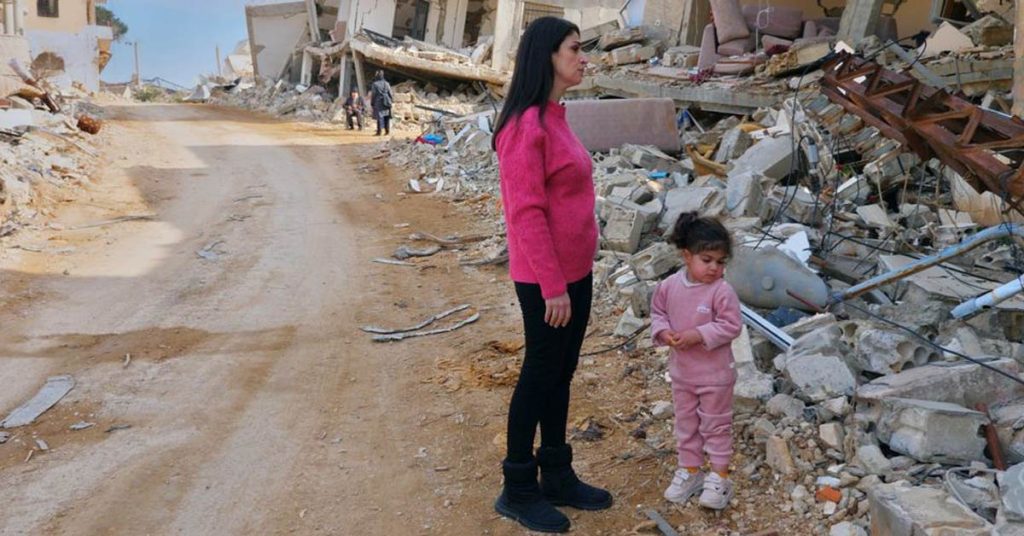
The most recent documentary by Abbas Fahdel, Tales of the Wounded Land, emerges as a profoundly human and poetic work about the devastation of southern Lebanon following the Israeli bombings at the end of 2024. Filmed amid the destruction, the film does not limit itself to exposing material ruins or funerals; instead, it places at the forefront the extraordinary capacity for resilience of the civilian population. Far from sinking into despair, the protagonists appear devoted to the reconstruction of their homes and communities, transmitting a vital force that both surprises and inspires.
This insistence on showing the impulse to rebuild life gives the documentary a hopeful tone, even within its tragic context. Fahdel does not hide pain or mourning, but constantly accompanies it with scenes where people sow again, repair, rebuild walls, and hold their children. In this way, resilience becomes a collective act that redefines the notion of resistance. The viewer discovers that the most powerful response to horror is not lamentation, but the determination to carry on.
The personal dimension of the project adds a unique element. Fahdel incorporates his young daughter as a central figure in the narrative, allowing her gaze to guide the viewer through the rubble and the testimonies. That child’s gaze, filled with innocence and curiosity, brings a freshness that balances the weight of the harsher images. The contrast between a little girl’s eyes and a ruined village becomes a powerful reminder of the continuity of life, even under extreme circumstances.
The documentary’s narrative arc culminates in collective scenes that reinforce the sense of community and shared identity. Over the course of nearly two hours, Tales of the Wounded Land does not restrict itself to showing the immediate pain of war but links it to a broader reflection on the cultural and spiritual resistance of peoples subjected to violence. This vision, in which sorrow is always accompanied by reconstruction, imbues the film with a profoundly human and philosophical tone.
Fahdel’s aesthetic choices reinforce this message. The use of long takes, the camera lingering on faces, animals, and devastated landscapes, as well as the presence of poetic sequences, make the film more than a simple documentary record. It becomes a visual poem that transforms the rawness of conflict into images charged with beauty and dignity. This blend of testimony and lyricism has been widely recognized by critics, who highlight its ability to move audiences and open space for reflection.
The most important recognition came at the Locarno Festival in 2025, where Abbas Fahdel was awarded the Pardo for Best Direction. The jury praised the artistic and philosophical strength of a film that manages to be, at once, an act of denunciation and a hymn to life. The award positioned Tales of the Wounded Land as one of the year’s most significant works in the documentary field, confirming Fahdel as one of the most prominent Arab voices in contemporary cinema.
This work forms part of the documentary trilogy the filmmaker has built with his wife and producer Nour Ballouk, which began with Tales of the Purple House. With Tales of the Wounded Land, the cycle reaches a narrative and thematic climax, delving deeper into the relationship between war, memory, and survival. Ultimately, it is an intimate chronicle that transcends the local to become a universal mirror of how communities confront adversity.
Abbas Fahdel, an Iraqi filmmaker with French nationality, has consolidated a career in which the personal merges with the political. From Homeland (Iraq Year Zero) to this latest film, his work has been characterized by documenting moments of historical crisis without ever losing contact with the everyday and the human. His style, at once sober and poetic, ensures that the camera not only records reality but transforms it into an experience of contemplation and reflection. Tales of the Wounded Land is a documentary that both moves and mobilizes. More than a simple record of a conflict, it is a visual meditation on the capacity for resilience and hope that defines peoples in the midst of destruction. Its greatness lies in showing that, even among the ruins, life insists, is remade, and projects itself toward the future. It is this poetics of resilience that makes the film an essential work, both as historical testimony and for its aesthetic and humanist power.