“It’s a very tough market, nobody knows anything”: Tricia Tuttle’s conversation on cinema and the global film industry
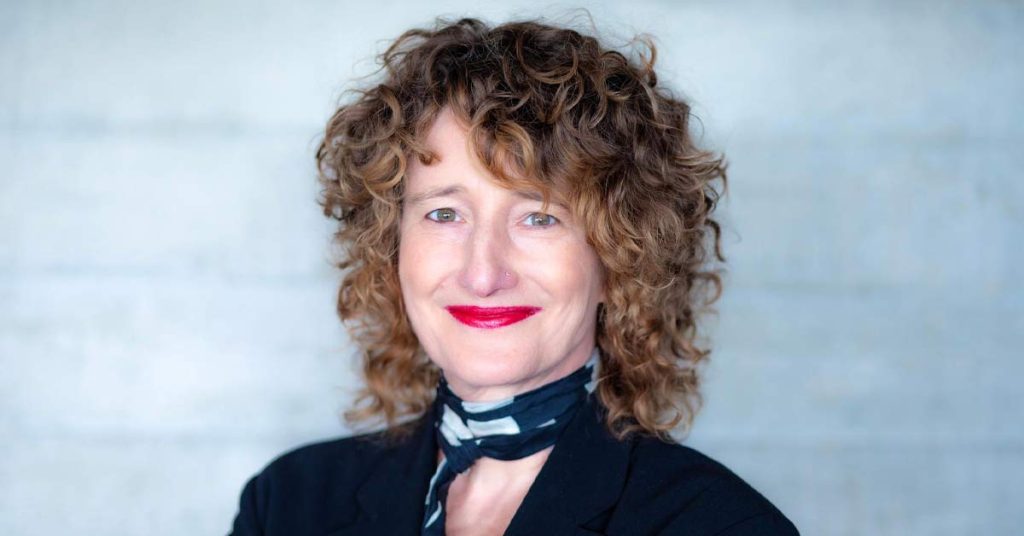
Tricia Tuttle approaches her second edition at the helm of the Berlinale with the feeling that she has already lived through an initial “whirlwind” and with the conviction that, now, for the first time, she can work with a genuine margin for planning. She explained this in a wide-ranging conversation with Louise Tutt on The Screen Podcast, in which she addressed both the festival’s structural challenges and the political, industrial and creative tensions currently shaping the world’s largest public film festival. “I started on April 1, 2024, and I didn’t have a full year to work on the programme. When I arrived, the first thing I wanted to do was build a strong executive team, and that easily took the first six months,” Tuttle recalled, stressing that the real work on the selection began “very late, in late summer and early autumn,” something she was determined not to repeat this year. “This time we started immediately, even during the festival itself. We were already having conversations about the next edition.”
In that first year, Tuttle found herself facing an unusual dual responsibility: creative oversight and the business management of a massive event. “This is a role where I don’t just have creative oversight of the festival, but also business oversight. I needed to put structures in place that would allow me to have a cross-cutting view of everything we do,” she explained. The learning curve was steep and, according to Tuttle, accompanied by a generous reception from both the German and international industry. “I think a lot of people understand the context we’re working in. It’s a huge, complex festival with many different needs, and that’s particularly true of the Berlinale,” she said, noting that the festival sold around 340,000 tickets to the general public last year and welcomed more than 115,000 accredited professionals. “There’s an enormous responsibility to serve that public audience, but at the same time we are a key international market, with almost 20,000 industry and media professionals.”
That balance between the popular, the artistic and the industrial runs through the entire conversation. Tuttle insisted that the Berlinale must simultaneously serve Berlin audiences, international professionals and the local German ecosystem of exhibitors and distributors. “Everyone wants something different from the festival. Our job is to prioritise, to find balance and to bring things together,” she said. In that sense, she reaffirmed the festival’s role as a launchpad for films that can find a life in cinemas. “The more we can support distributors and exhibitors and help launch films that connect with audiences, the better,” she argued, while acknowledging the difficulty of the current moment. “It’s a very tough market. Nobody knows anything. Films we thought would do well in awards season haven’t performed as we hoped.”
For Tuttle, success is neither singular nor uniform. She cited recent films that, without becoming global phenomena, achieved solid circulation across different territories. “Sometimes, when we look at a big international festival, we only see the films that make a lot of noise in an Anglophone context. But there are many different levels of success that we also want to enable,” she said, using a revealing metaphor: “Maintaining that vibrant fauna and flora, that healthy ecosystem for all kinds of cinema, is part of what the Berlinale can and should do.”
Asked about the perception that major European sales companies prefer to premiere their biggest titles in Cannes, Tuttle avoided a confrontational tone. “Cannes is a wonderful and very powerful festival, especially in recent years. I don’t blame any sales agent for wanting to go there,” she said, but added that the film calendar cannot be reduced to a handful of focal points. “We need a twelve-month year. It’s not just about over-focusing on particular festivals, it’s also about how awards season takes up so much space for a very small number of films.” In her view, responsibility also lies with the Berlinale itself: “We have to make our platform as strong as possible to help launch films into the world. It’s not about asking filmmakers to give something up, but about offering them a place with real impact.”
Along those lines, she explained that one of the ongoing tasks is to more clearly differentiate the festival’s sections. “When I arrived, I felt the sections had become a bit compressed. It wasn’t clear what was Competition, Encounters, Forum or Panorama. We’re sharpening those identities so buyers can find what they’re looking for and sales agents feel confident launching a film in the right section,” she said. The aim, she added, is “to make the entire experience as frictionless as possible,” from press to buyers to audiences.
The conversation also touched on a particularly sensitive issue: the political climate and tensions around freedom of expression following the controversial 2024 closing ceremony, which took place before Tuttle assumed the role. She was unequivocal. “The festival has a long tradition of screening outstanding films from North Africa and the Middle East, and we want to continue that,” she said. She acknowledged the need to “rebuild trust” with filmmakers who felt uneasy. “We did a lot of work last year to take the heat out of the debate and to make it clear that this is a platform that values freedom of expression,” she explained. At the same time, she defended a responsible approach: “We live in an angry world, with very sharp divisions. That shows up at festivals, and that’s normal. But we also feel a responsibility to encourage open, thoughtful and respectful dialogue.”
On the economic front, Tuttle said the festival’s budget remains stable compared to last year. “Our biggest costs are staffing, because our employees are public servants, with regulated salaries and annual increases. That’s something we can’t really control,” she explained, while assuring that the budget is balanced and that “this year we’re in a good position.” She also dismissed rumours of a move away from Potsdamer Platz. “There are no plans to move at the moment. We’re here, at least for the next few years.”
When the conversation turned to programming, Tuttle avoided naming favourites but highlighted diversity as one of the edition’s key strengths. “I genuinely think there will be something for every film lover in the competition,” she said. She expressed particular pride in the number of female directors presenting their second and third features. “That’s crucial, because we often see great female debuts and then don’t hear from those filmmakers again for years. Here, there are real discoveries,” she said. More broadly, she summed up her approach with a statement that encapsulates her vision of the role: “I don’t see festivals as an aggressive competition. Each film needs to find the right place, where it has the space and the air it needs.”
At the close of the conversation, in a more personal register, Tuttle encouraged visitors to step outside the festival bubble and explore Berlin on foot, even in winter. “Walking along Unter den Linden into Mitte is beautiful. It really makes you realise how stunning the city is,” she said, before sharing a restaurant recommendation off the beaten track. A minor detail, perhaps, but one that aligns with a director who seems to understand the Berlinale not only as an industrial and cultural event, but as an open, living urban experience, in constant dialogue with its time.