“What We Thought Had Fallen Asleep”
By Pablo Gross
In a secluded corner of the map, where summer seems to suspend time and soften any sudden jolt, unfolds a story that invites us to look beyond comfort. What may at first appear to be a peaceful retreat for two friendly couples transforms into a serene reflection on the human need to reconnect with whatever once made us feel alive. In this setting that promises absolute calm, a subtle unease emerges—an inner murmur revealing how even the safest places can stir up questions we have preferred to keep quiet.
Daily life, full of shared routines, family laughter, and repeated gestures, becomes a mirror in which the protagonist begins to see herself from a new distance. Between light conversations and sun-soaked afternoons, she discovers that stability—so valuable and reassuring—can also conceal a longing for change beneath a layer of stillness. What surfaces is not an obvious conflict but an intimate tremor, the sense that life is urging her to rediscover shades of herself she believed were lost.
The unexpected appearance of someone tied to her past acts more as a reminder than a threat. He does not arrive to disrupt her world but rather to illuminate, from the margins, parts of herself she had left dormant. That encounter rekindles memories of what once was drive, illusion, possibility. Instead of pushing her toward drama, it guides her into deeper contemplation: What remains of the person who once dreamed of other paths? When did desire become so quiet?
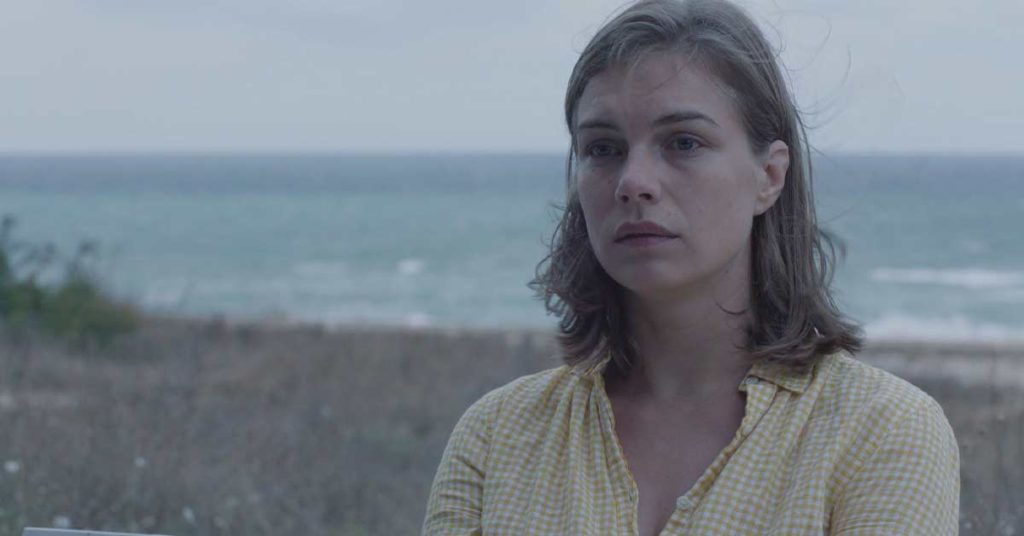
The strength of the story lies in how it allows these emotions to unfold unhurriedly. Every silence, every gaze lost on the horizon, every gesture that seems insignificant becomes part of an emotional journey that does not seek quick answers. The summer light and the constant murmur of the sea accompany her introspective process, creating a beautiful contrast between the outer serenity and the inner disorder slowly coming into view.
What is truly inspiring is that the story never judges this emotional imbalance—it understands it. It suggests that questioning one’s own life is not a betrayal of what one has, but an act of profound honesty. Through the protagonist, the film sketches the idea that dissatisfaction does not necessarily arise from emptiness, but from the desire to recover an essential spark. Vulnerability becomes a fertile starting point, not a flaw.
As the narrative unfolds, what initially seemed like a diffuse unease transforms into a luminous opportunity. The protagonist learns to listen to whatever tries to surface beneath layers of habit and caution, understanding that desire does not disappear—it merely changes shape. What remains in the end is a hopeful message: even in the most protected spaces, there is always the possibility of renewal, of looking inward, of allowing life to surprise us again. This intimate journey, full of humanity, reminds us that it is never too late to recover the impulse that once made us move forward with open eyes and an awakened heart.