

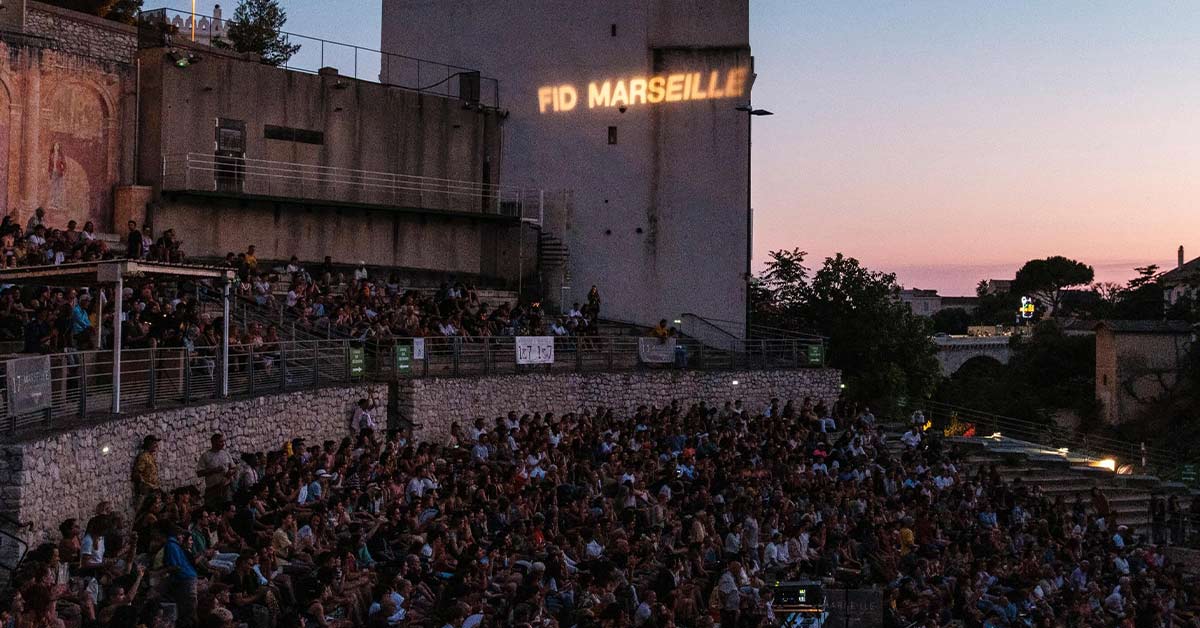
With a large opening ceremony at the Théâtre Silvain, the 37th edition of FIDMarseille got underway — one of the most prestigious festivals dedicated to auteur cinema and new forms of filmmaking. Under the motto of being “a space of freedom for today’s cinema,” the festival will run from July 7 to 12 with a lineup of 133 films from 42 countries.
The opening brought together French-Algerian filmmaker Rabah Ameur-Zaïmeche and the Portuguese artist duo Mariana Caló and Francisco Queimadela, ahead of the world premiere screening of Route Algéricaine, Ameur-Zaïmeche’s new work.
“A place synonymous with great freedom to make and show films,” was how the festival’s new president, François Quintin — also director of the Fondation Lambert in Avignon — defined it. That freedom has been part of FIDMarseille’s DNA since its founding, reflected in a program that erases the boundaries between documentary, fiction, cinematic essay, and artists’ film, favoring authorial perspectives that push the limits of audiovisual language.
The 2026 edition maps out contemporary cinema with 133 titles exploring new narrative and aesthetic forms. Taking part in this journey are 116 filmmakers from around the world, who will accompany screenings and engage with audiences over the festival’s six days.
One of the major highlights of this edition is the tribute to Rabah Ameur-Zaïmeche, the festival’s guest of honor. Besides the international premiere of Route Algéricaine, the director will be the subject of a full retrospective spanning his entire filmography, from Wesh Wesh (2001) — regarded as a landmark work on the French urban periphery — to titles such as Les Chants de Mandrin and Le Gang des Bois du Temple. The filmmaker will also take part in public conversations as part of the FID’s traditional Forum and in the presentation of a collective book devoted to his work.
Another notable retrospective is dedicated to Portuguese artists Mariana Caló and Francisco Queimadela, whose work sits between cinema and contemporary art. The festival will present the international premiere of their first feature film, Infinito infinito na imaginação da matéria, along with an exhibition of audiovisual installations and visual works at the Sissi Club gallery.
The official competition brings together 70 films from every continent, with particular attention to emerging cinematographies and independent productions. Standouts include A Requiem in Bishkek, by Indian filmmaker Sica Ray, shot in Kyrgyzstan; Chicken Soup, by French director Caroline Milcent; and Az Zeeb, by Chilean filmmaker Rafael Guendelman, a reflection on family memory, displacement, and exile. New works by festival regulars Ted Fendt, Anna Marziano, Adolfo Arrieta, and Jean-Claude Rousseau will also compete.
Outside the competition, the “Autres Joyaux” section will showcase some of the program’s most anticipated titles, including Fe sense Obres Morta és, by Albert Serra, centered on the world of painter Antoni Tàpies; I Promise I’ll Come and Rescue You, the directorial debut of French actress Vimala Pons; as well as new films by Florence Pazzottu and Algerian director Hassen Ferhani.
The festival also sets aside space for young audiences with a free program of animated short films made by students from the MoPA school in Arles, accompanied by stop-motion animation workshops at the Alcazar Library.