Tricia Tuttle, director of the Berlinale, defended her model of diversity and artistic balance before the German Parliament
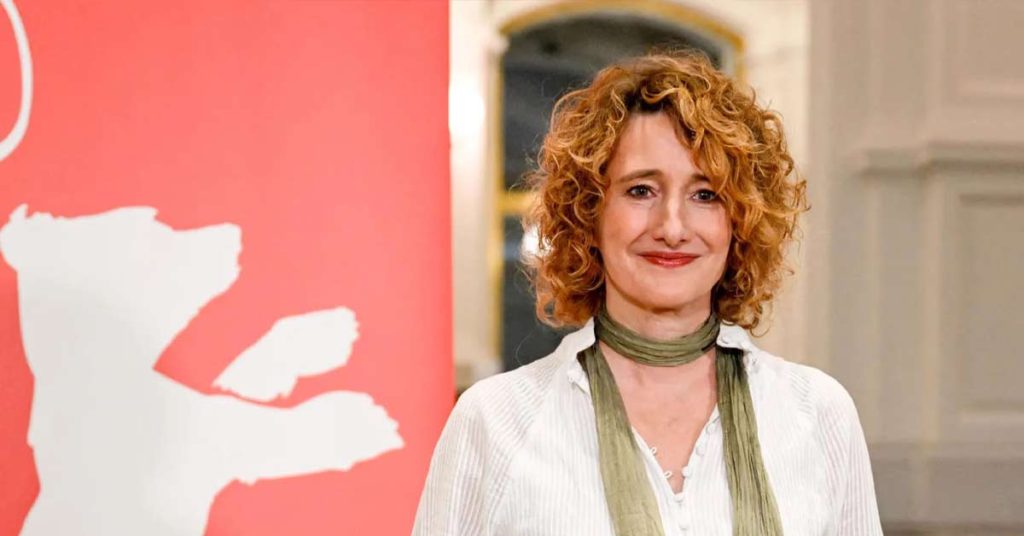
The director of the Berlin International Film Festival, Tricia Tuttle, appeared last week before the Bundestag’s Committee on Culture to outline and defend the Berlinale’s artistic and financial direction, placing particular emphasis on diversity of perspectives, the balance between auteur cinema and commercial productions, and the need to preserve the festival as an open space for dialogue. During her address, Tuttle stressed that the festival does not adhere to a single aesthetic or ideological line, but rather seeks to offer programming capable of engaging very different audiences, convinced that the essence of cinema as an art form lies precisely in the plurality of criteria and the coexistence of divergent views.
Responding to lawmakers’ questions about the programme, Tuttle insisted that the Berlinale works consciously to create different “points of entry” for audiences, providing space both for filmmakers operating in more experimental or contemporary art contexts and for films aimed at broad, mainstream audiences. In this respect, she recalled that one of the festival’s historic hallmarks has always been its ability to encompass the full spectrum of what is understood as cinema, from intimate and personal documentaries to large-scale commercial premieres, without establishing exclusionary hierarchies between them.
Tuttle also addressed the festival’s economic model, highlighting progress towards greater financial autonomy. According to her, the 2024 edition generated 60% of its income through its own revenues, while the contribution from sponsors increased by 27%—a development she argued strengthens the festival’s sustainability without compromising its cultural identity. Within this framework, she defended the Berlinale as an event that is economically open as well, and as a celebration of the collective, theatrical filmgoing experience, in contrast to more individualised forms of consumption.
The parliamentary appearance also addressed the controversy surrounding the 2024 closing awards ceremony. Tuttle explained that, following that episode, the festival team undertook an extensive process of internal reflection to examine how to ensure a fair, inclusive environment conducive to the exchange of ideas. She argued that a festival with international ambitions must help ensure that Germany is perceived as a place for dialogue, which entails neither shutting down debate nor shying away from complex issues, while maintaining a position of zero tolerance towards antisemitism and any form of discrimination.
As she specified, all statements and expressions made within the framework of the Berlinale must comply with Germany’s free speech laws, which she described as broad and robust, and within that framework the festival assumes its responsibility to provide a balance of perspectives. This marked the second time Tuttle has appeared before the Bundestag’s Committee on Culture since officially taking up her post as festival director. The first took place in April 2024, just days after her appointment, at a meeting also attended by the then Minister of State for Culture and the Media, Claudia Roth, and the Berlinale’s executive director, Mariette Rissenbeek.