

The invisible resonances in Father Mother Sister Brother by Jim Jarmusch
“A subtle exploration of family bonds in which what matters most is not spoken, but implied. Through repetitions, silences, and small anomalies, the film turns the everyday into an uncertain territory, revealing that all closeness is threaded with zones of mystery that are difficult to decipher.”
By Fernando Bertucci
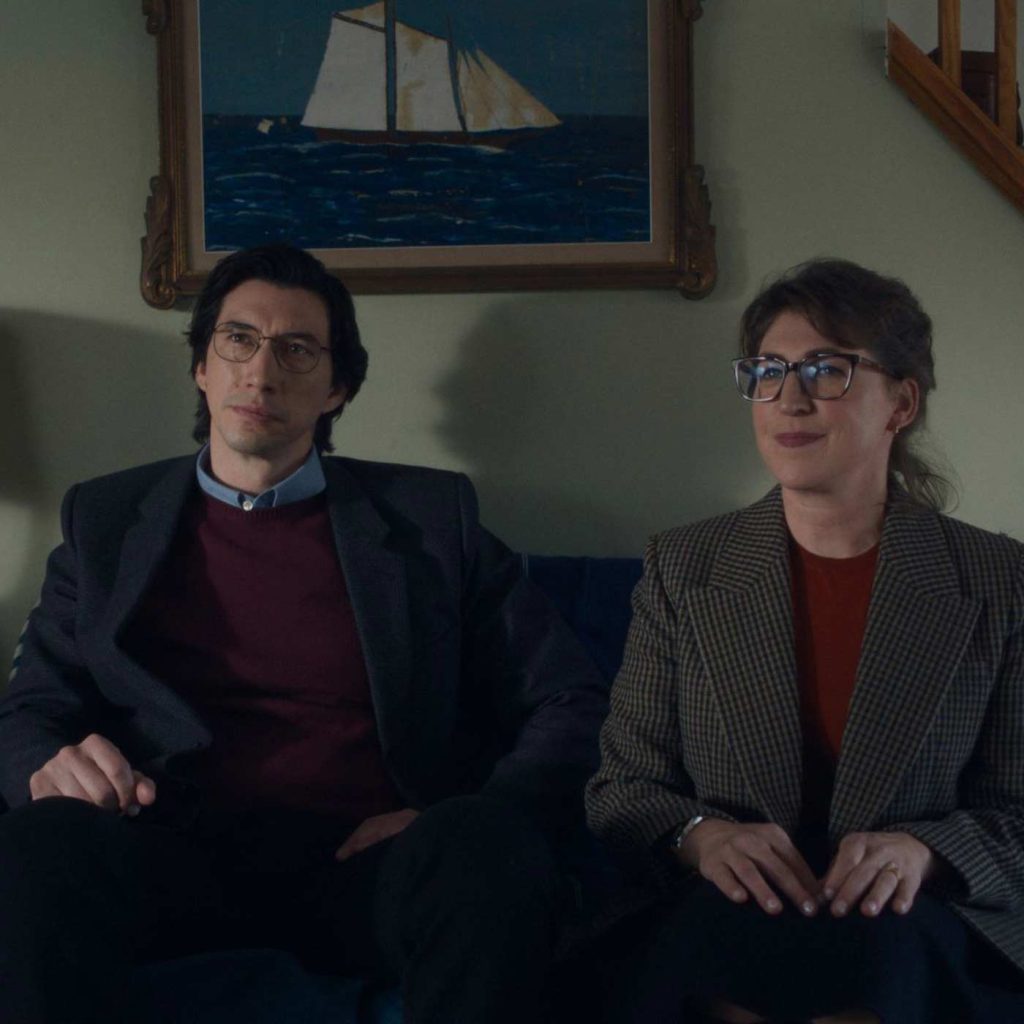
There are filmmakers who organize the world through plots, and others who do so through rhythms, repetitions, and silences. In that second group, Jim Jarmusch occupies a singular place: his work seems less interested in telling stories than in registering states of consciousness. In Father Mother Sister Brother, that inclination reaches a particularly distilled form. The film unfolds as a triptych of family relationships, but what is truly at stake is not the anecdote of those encounters, but the way those bonds are perceived, distorted, and remembered.
For decades, Jarmusch has worked with a logic akin to meditation. It is no coincidence that in Ghost Dog: The Way of the Samurai the idea of treating serious matters lightly appears: there one could already glimpse an aesthetic ethic that avoids emotional underlining and privileges distance. In his new film, that premise is radicalized. Each episode presents siblings confronting the figure of a father or a mother, yet the conflict is never expressed directly. Instead, it filters through small gestures, seemingly insignificant objects, and dialogues that circle what is essential without ever fully touching it.
What is remarkable is that this restraint does not cool the experience, but rather makes it strangely recognizable. The families portrayed are not defined by major revelations, but by the accumulation of misunderstandings and omissions. The characters speak, yet what they say rarely aligns with what they feel. In that misalignment, a form of truth emerges: the impossibility of fully knowing those who are supposed to be closest to us. The film suggests that intimacy is not transparency, but a shared zone of opacity.
The first segment introduces a visit that might seem routine: two siblings returning to their father’s home. However, the everyday becomes unsettling as details emerge that do not quite fit. An object out of place, an evasive response, a behavior that resists classification. Jarmusch does not turn these elements into clues of a mystery to be solved, but into signs that reality itself is ambiguous. The question is not what exactly is happening, but how to interpret it—and that interpretation never stabilizes.
That same logic recurs in the second episode, where the relationship with the mother is built from almost imperceptible tensions. The sisters seem to compete for a recognition that is never explicitly articulated. The mother, for her part, oscillates between authority and fragility, without either facet fully prevailing. What unfolds is a play of roles in which each person performs a version of themselves. The family thus appears as a theatrical structure in which identities are sustained more by repetition than by conviction.
In both cases, the repetition of certain elements—phrases, objects, situations—creates a sense of echo. These are not closed symbols, but recurrences that invite connections. Jarmusch seems interested in the way the mind recognizes patterns even when no clear meaning is available. The viewer becomes an active interpreter, someone searching for sense within reiteration. Yet that search does not lead to a definitive conclusion, but to a proliferation of possible readings.

The third episode introduces a decisive variation: the absence of the parents. Here, the relationship is no longer built through direct encounter, but through the work of memory. The siblings sift through objects, recall episodes, and try to reconstruct an image that always remains incomplete. Death does not appear as closure, but as an opening onto new questions. Who were those parental figures, really? What parts of their lives remained hidden? To what extent is it possible to understand them in retrospect?
At this point, the film suggests that every relationship is traversed by a fictional dimension. To know someone also means to imagine them, to fill in their gaps with hypotheses and projections. Children inherit not only objects, but fragmentary narratives that must be reorganized. That reorganization does not produce a definitive truth, but a provisional narrative. Family identity thus reveals itself as an unstable construction, always subject to revision.
One of the film’s most intriguing aspects is its treatment of time. There is no conventional dramatic progression, but rather a series of moments that seem suspended. The scenes unfold with a slowness that compels attention to the minimal. Instead of moving toward a climax, the film expands laterally, exploring variations on a single theme. This structure reinforces the idea that what matters is not what happens, but how it is perceived.
That perception is marked by an almost oneiric quality. The spaces and situations feel familiar, yet slightly displaced at the same time. As in a dream, everything seems coherent while it is happening, though difficult to explain afterward. Jim Jarmusch does not underscore this effect, but allows it to emerge through repetition and duration. The result is an experience that oscillates between the recognizable and the strange.
In this sense, the film can be understood as an exploration of consciousness more than as a narrative about family. The characters function less as fully defined individuals than as vectors of sensation. What matters is not their psychology, but the atmosphere they generate. Jarmusch works with an economy of means that strips away the superfluous and lays bare what is essential: the difficulty of connecting, the persistence of the past, the fragility of bonds.
At the same time, there is a certain irony in the way these situations are presented. Potentially dramatic moments are resolved without emphasis, almost with indifference. This strategy avoids immediate identification and instead demands a more distanced gaze. The aim is not direct empathy, but observation and reflection. Emotion does not disappear, but becomes more diffuse, harder to locate.
Toward the end, the film offers no clear resolution. The characters remain in a state of suspension, as if the story could continue indefinitely. This lack of closure is not a flaw, but a logical consequence of its premise. If relationships are incomplete and interpretations always partial, any conclusion would be arbitrary. Jarmusch chooses to leave things open, trusting that this openness is more faithful to experience.
Father Mother Sister Brother suggests that family life is not defined by major events, but by a series of seemingly insignificant moments that, through accumulation, acquire a particular weight. It is in those details that what matters is at stake, even if we do not always know how to read them. The film does not seek to teach or to convey a single, univocal message. Rather, it proposes a mode of attention: a way of looking at the everyday as though it concealed something that never fully reveals itself.