

The Fragility of What We Believe We Control. On Father, by Tereza Nvotová
"The third feature film by Tereza Nvotová departs from a true story to explore one of the most disturbing fears in human experience: that the brain, under pressure, can betray us in irreversible ways. A drama of rare formal precision and emotional honesty."
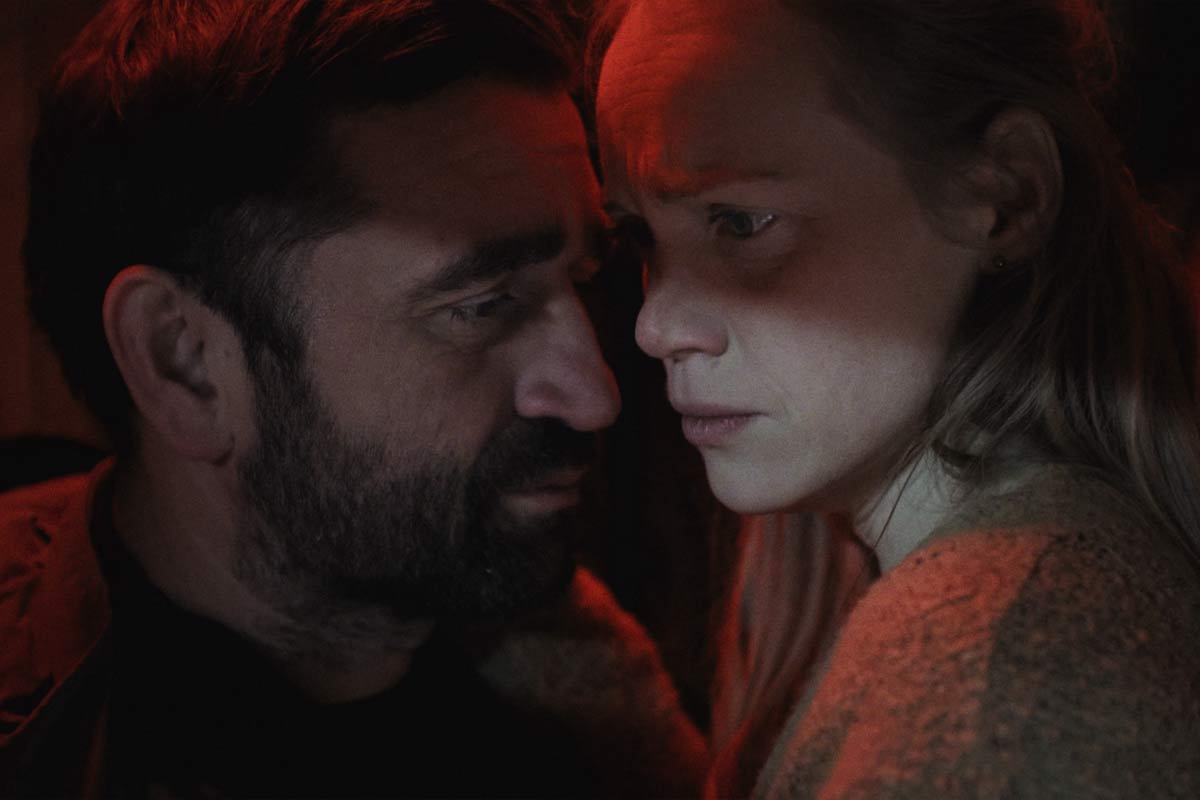
There is a type of tragedy that is born not from malice or indifference, but from the ordinary, fallible workings of the human brain. There is no villain. There is no intention. There is, simply, an error that the nervous system makes under certain conditions of stress and routine, and whose consequences are irreparable. It is around this kind of tragedy that Slovak director Tereza Nvotová builds Father (Otec, 2025), her third feature film and, without question, her most ambitious and accomplished work to date.
The film departs from a real event that shook the Slovak city of Nitra and falls within a documented yet little-known phenomenon outside specialized circles: the so-called forgotten baby syndrome. The mechanism behind this phenomenon is as simple to explain as it is difficult to accept. The human brain operates with two memory systems that coexist but do not always communicate effectively: habitual memory, responsible for managing automatic routines, and cognitive memory, which records conscious variations from those routines. When a person under stress introduces a new element into a familiar pattern, habitual memory can take over and generate recollections of actions that never actually took place. The father who habitually goes straight to work, and who one day is asked to first drop the baby off at daycare, may arrive at the office with a vivid and false memory of having completed that task. The baby is still in the back seat. This happens approximately forty times a year in the United States alone. It happens all over the world. And it happened to a man in Nitra.
The first thing Father does — and does masterfully — is deny the viewer the comfortable position of judgment. Nvotová presents the scene of the supposed drop-off at the nursery as if it were real: we see it with all the ordinariness of any domestic moment. Only much later do we understand that it was a mental fabrication, a memory that the protagonist’s brain constructed in real time to complete a routine it felt had been fulfilled. That narrative choice carries a powerful consequence: for a few minutes, the viewer believed what Michal believed. We were unwitting accomplices in the cognitive deception before knowing we were being deceived. When the truth emerges, the disorientation is shared — and that radically changes the relationship one forms with the character and with his guilt.
On that foundation, the film develops a three-act structure that operates with a dramatic coherence and formal ambition rarely seen in recent European cinema. The first act unfolds over a single exhausting day: Michal, a journalist trying to keep a small regional newspaper alive while secretly negotiating a loan with his ex-partner and introducing a new investor to his newsroom, carries an accumulation of pressures that Nvotová captures with a camera that never rests. Cinematographer Adam Suzin’s long tracking shots trap the viewer inside Michal’s world without granting any relief or distance. The oppression is physical. The heat of the heat wave passing through the city is not merely a meteorological detail but an atmospheric condition that permeates every scene, thickening the air and making everything — even the mundane — feel on the verge of collapse.
The second act is the most brutal and also the most honest. Nvotová neither softens the breakdown nor aestheticizes it: she captures it with a camera that follows the characters through their most erratic and vulnerable movements, in moments when grief no longer fits inside the body and seeks an outlet through any available crack. But what distinguishes Father from other dramas about loss is that the director is not content with showing individual suffering — she examines with equal rigor how pain destroys bonds. Michal and Zuzana do not go through the same loss at the same time or in the same way, and that asynchrony, so realistic and so cruel, is what ultimately fractures whatever remained between them. The question the film leaves suspended without easy answer belongs to an ancient and urgent philosophical category: is forgiveness possible when the one who caused the harm also suffers from it — when there was no intention, only a failure of the system?

The third act moves the drama into the public space of the judicial process, and that transition serves a precise dramatic function. What was an intimate catastrophe becomes national news, a debate, a mirror in which an entire society looks at itself and decides what kind of judgment it wants to render. The verdict acknowledges that Michal’s error was not criminal but human — all too human — and that distinction matters because the film is not interested in punishment but in something harder and more necessary: understanding.
Jonatán Pastircák’s score operates throughout the film as a second emotional language. Its electronic textures and calculated dissonances do not illustrate what is happening on screen but expand it from within, generating an unease that unsettles not for the sake of unsettling but opens inward toward the interior state of the characters. There are moments when the sound becomes almost unbearable, and that unbearability is exactly the right response: it is what Michal feels, it is what Zuzana feels, and the film manages to make us feel it too without any dialogue explaining it to us.
Father is a film about the fragility of what we believe we control. About the infinitesimal distance that separates an ordinary day from a day that changes everything. Nvotová offers neither consolation nor moral, but in the final stretch she allows a small crack of light — not a redemption but a possibility, a hint that life, for all its brutality, goes on. After ninety minutes of immersion in the most domestic and most real of horrors, that crack is enough. It is, in fact, all one can ask for.
