“A Face for the Future”
By Kristine Balduzzi
Marc Isaacs once again challenges the traditional categories of cinema with Synthetic Sincerity, a work that proposes a renewed relationship between the human and the artificial without falling into alarmism or solemn discourse. He does so from an intimate and grounded perspective, using as a starting point Ablikim Rahman, a Uyghur cook whose small restaurant in North London becomes, unexpectedly, the gateway to a world of technological experimentation. This choice, as humble as it is revealing, allows the director to unfold a gaze that blends warmth, curiosity, and a subtle irony about what we perceive as truth on the screen.
Rahman agrees to participate in a university project that studies human facial expressiveness through advanced digital analysis techniques. Far from being treated as a passive subject, he appears as an unspoken ally of Isaacs, someone who observes with a mix of wonder and amusement how his everyday gestures can be transformed into data capable of feeding an artificial version of himself. His presence provides an emotional counterpoint that anchors the film to the everyday even as it ventures into conceptual territories.
The laboratory in which the study takes place is fictional, although it is populated by real researchers who naturally join Isaacs’s game. What could have turned into a cold portrait of scientific investigation becomes a space where the absurd and the authentic coexist. The spontaneous gestures of the students, the energy of the professor in charge, and the overall willingness to experiment contribute to an atmosphere where fiction operates as a mirror for a deeper truth. Isaacs manages not to hide reality through artifice, but rather to amplify it.
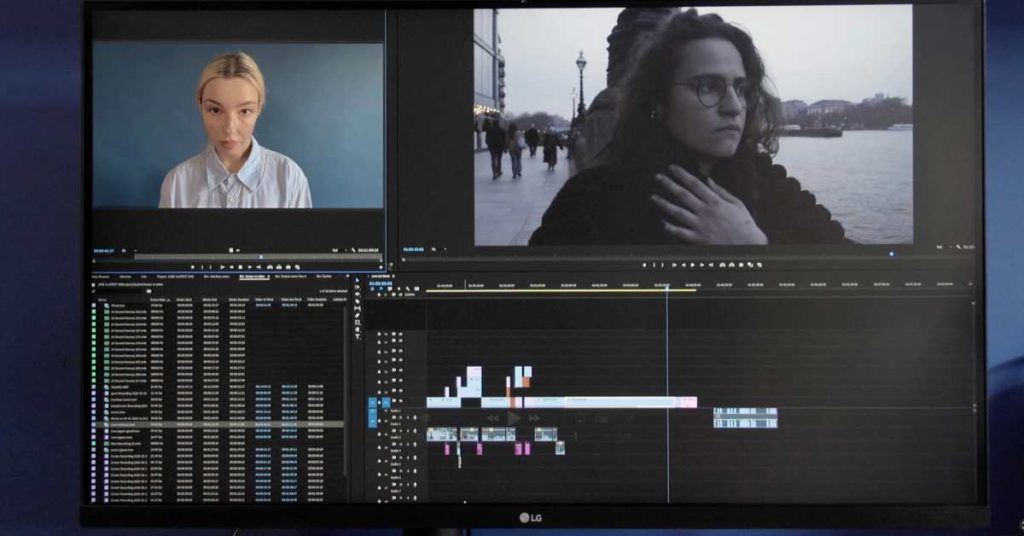
One of the film’s most striking elements is the presence of an avatar that guides the director within the research world. This figure, generated from recordings of actress Illinca Manolache and digitally modeled, embodies a singular blend of authority and humor. Its tone—always a bit stern but never hostile—acts as a narrative compass and adds a comic layer that softens the film’s denser reflections. Through this interaction, the film explores a form of dialogue between the creator and a creature that exists halfway between performance and algorithm.
Isaacs weaves documentary scenes with more clearly constructed sequences without drawing a visible line between the two. The fluidity with which these elements combine gives rise to a work that breathes freedom and refuses to be confined to a single genre. This mixture makes it possible to explore artificial intelligence without turning it into a threat or a redemptive promise, simply as a new territory in which to observe how gestures, emotions, and human institutions respond.
One of the film’s most refreshing aspects is its rejection of solemnity. Isaacs approaches the subject with curiosity and doubt, avoiding hasty conclusions. He does not point to technology as the culprit but instead invites viewers to consider the social structures that determine how it is used and who benefits from it. This critical yet non-pessimistic perspective gives the film a lightness that never becomes superficial, but rather opens the door to multiple interpretations.
The film also raises questions about representation. Faced with a digital face created from a real human being, we wonder to what extent we can identify with a figure that has no lived experience. Isaacs suggests that this may not be so different from the relationship we establish with traditional fictional characters. After all, every audiovisual work constructs an illusion that we accept because we choose to believe in it, and that pact with the viewer is renewed here from a contemporary angle.
The portrayal of the researchers introduces a social dimension that broadens the reading of the film. Institutional tensions, concerns about student diversity, and the influence of external interests filter through small scenes that reveal that even in the spaces where the future is imagined, decisions remain shaped by profoundly human vulnerabilities. It is a reminder that technology does not advance in isolation, but always in dialogue with political and cultural contexts.
Despite its modest budget, Synthetic Sincerity radiates an uncommon creative freedom. Isaacs demonstrates that independence can be a powerful ally when exploring ideas without the constraints of rigid structures. His film moves forward naturally, without haste to resolve the questions it raises. In the end, what remains is an invitation to look toward the future with curiosity.