Ross McClean’s debut feature, Magilligan (2026), unfolds before the viewer not merely as a documentary about prison life, but as a profound, intimate, and unsentimental meditation on the fractured identity of a young Northern Irish man named Ryan. Building on the narrative thread of his earlier short film Hydebank (2019), McClean once again immerses us in the reality of this protagonist, whose existence appears trapped in a cycle of criminality, addiction, and repeated incarceration within HM Prison Magilligan, a medium-security facility in County Londonderry. The film is structured around an almost paradoxical premise: within walls that symbolize punishment, Ryan discovers an unexpected form of emotional escape through a rehabilitation program that allows him to care for sheep. McClean does not frame this bond with animals as a miraculous cure or a simplistic cinematic redemption, but rather as the first indication of an alternative path for a man who has internalized the prison system to the point of feeling “happy,” or at least comfortable, within it. The candor with which Ryan accepts his fate, even when parole is denied via a video screen, reveals the tragedy of an individual for whom the outside world offers little more than confusion and threat, while the inside provides a predictable and secure routine.
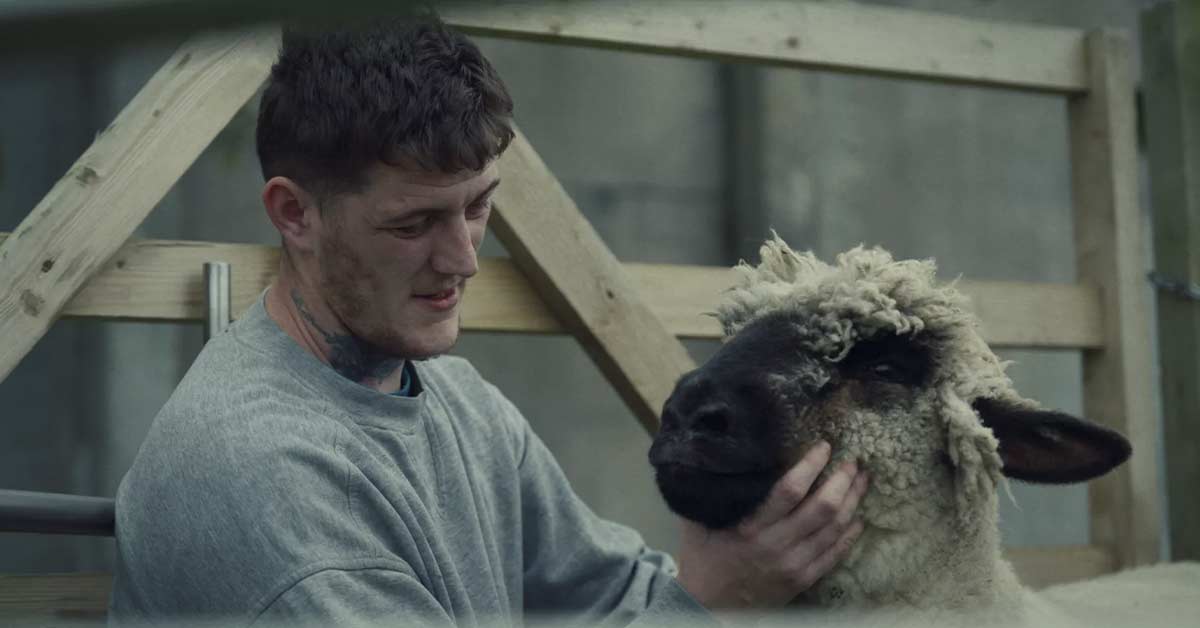
The director, who also serves as cinematographer, adopts a patient and respectful approach that allows Ryan the space to reflect on his own inherited burden. The film becomes particularly incisive in its exploration of social and genetic determinism; Ryan openly admits that prison is in his DNA, referencing the history of incarceration shared by his father, grandfather, and uncles. This familial weight, combined with an environment shaped by violence and a strict code of silence in relation to paramilitary forces, seems to suffocate any possibility of change. Yet the visual contrast between his hardened exterior—marked by tattoos and an impassive expression—and the tenderness with which he cradles a lamb produces one of the most striking images in recent documentary cinema. McClean examines how this relationship with the animals enables Ryan, perhaps for the first time, to form a connection grounded in selfless care, literally softening his features and revealing the vulnerability beneath his defensive armor. Despite setbacks, relapses into drug use, and the verbal abuse of fellow inmates who mock his pastoral duties, the film ultimately closes on a note of tentative hope. During a visit to a farm, as Ryan once again observes the sheep, he seems to glimpse, perhaps for the first time, the possibility that his identity need not remain a life sentence, and that true freedom may lie in the capacity to feel genuine affection for another living being.