

“Meanwhile…”
Por Pablo Gross
Letter to My Dead Parents, the latest film by Ignacio Agüero, stands as a delicate and persistent ritual of contact with the irretrievable. Far from the conventional form of the “filmed letter,” this film expands the genre until it becomes an exercise in memory and dream, just as Raúl Ruiz—an unavoidable reference for Agüero—proposed in his writings on a shamanic cinema: a cinema where the living speak with the dead without astonishment or excessive solemnity, crossing mysterious bridges between dimensions.
The starting point seems almost trivial: Agüero sets out to visit his parents, to speak with them after so many years of absence. The paradox is obvious: both have been dead for a very long time. But for the Chilean filmmaker, death is merely a blurred frontier when filming from the garden of the family home, where flowers, cats, and the wind activate a secret dialogue between what once was and what continues to resonate. It is precisely in that backyard, with its trees and its soft light, where the film finds its tone: a blend of melancholy, affection, and a certain lightness that disarms any temptation of monumentality.
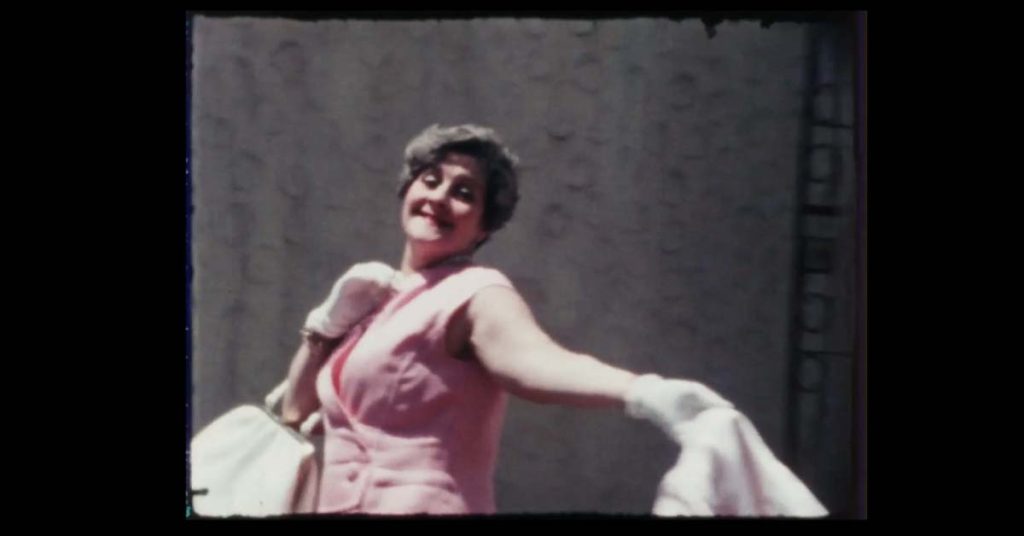
More than paying homage, Agüero turns the house (a recurring space in his work) into a vessel that travels through time. The windows, the corridors, the veranda—they all function as thresholds between eras: childhood memories overlap with images from the dictatorship, fragments of earlier films, and dreams in which Ruiz, exiled and forever free, reappears as a ghostly guide. This coexistence of materials—family photos, home videos, shots of the present, fragments of No Olvidar—builds a narrative that does not move forward in a straight line but expands like a constellation. Each scene connects to the next through free associations that the editing embraces, unafraid of excess or confusion.
In this trance of images, Agüero allows himself a political question: how can a country still tolerate the absence of more than a thousand bodies seized by the dictatorship? How can such an open wound persist without endlessly naming the disappeared? For this reason, at times the film becomes a memorial: the repetition of names, the evocation of the Lonquén massacre, the sudden appearance of No Olvidar as an echo that refuses to be archived. Yet the gravity of these moments is balanced by the lightness of life that goes on: a hummingbird resting on a flower, a cat exploring the roof, the breeze shaking the leaves. These shots, which seem stolen from time itself, work as breaths that lighten the weight of History and remind us that death does not erase the everyday beauty of life.
One of the most intimate gestures in Letter to My Dead Parents is its voice-over. Agüero speaks as if thinking out loud, without the pretense of an orator or the stiffness of a narrator. It is a voice recorded many times during the editing itself, testing its precise tone, searching for closeness with the viewer. At times it feels repetitive or untidy, but this drift is not a flaw—it is part of the search: a narrative that builds itself while it thinks, that allows itself to wander and return, unafraid of accumulating material or revealing the fragility of confession.
To this flow of words are added interviews with people who knew his father. Some testimonies stretch on longer than necessary, as if prolonging the illusion of a conversation interrupted by death. These fragments expand the letter, make it polyphonic, and keep it from becoming a monologue. In that openness lies part of the film’s vitality: speaking to the dead also means speaking with the living, with children, friends, trees, and memories that refuse to petrify.
Filmed with the serenity of someone who no longer needs to prove anything, Letter to My Dead Parents confirms Agüero’s commitment to a cinema conceived in the backyard of his home, with the camera always at hand, ready for the tiny dance of reality. Every cloud, every bird, every insect that lands in front of the lens says something about this other form of resistance: recording beauty without history, the instant without discourse, the life that seeps through while History insists on repeating itself.
Titulo: Cartas a mis padres muertos
Año: 2025
País: Chile
Director: Ignacio Agüero
