

How to Film Violence? Cinema After The Zone of Interest
“Today, an image can circulate millions of times and yet remain completely detached from the historical conditions that would allow it to be interpreted.”
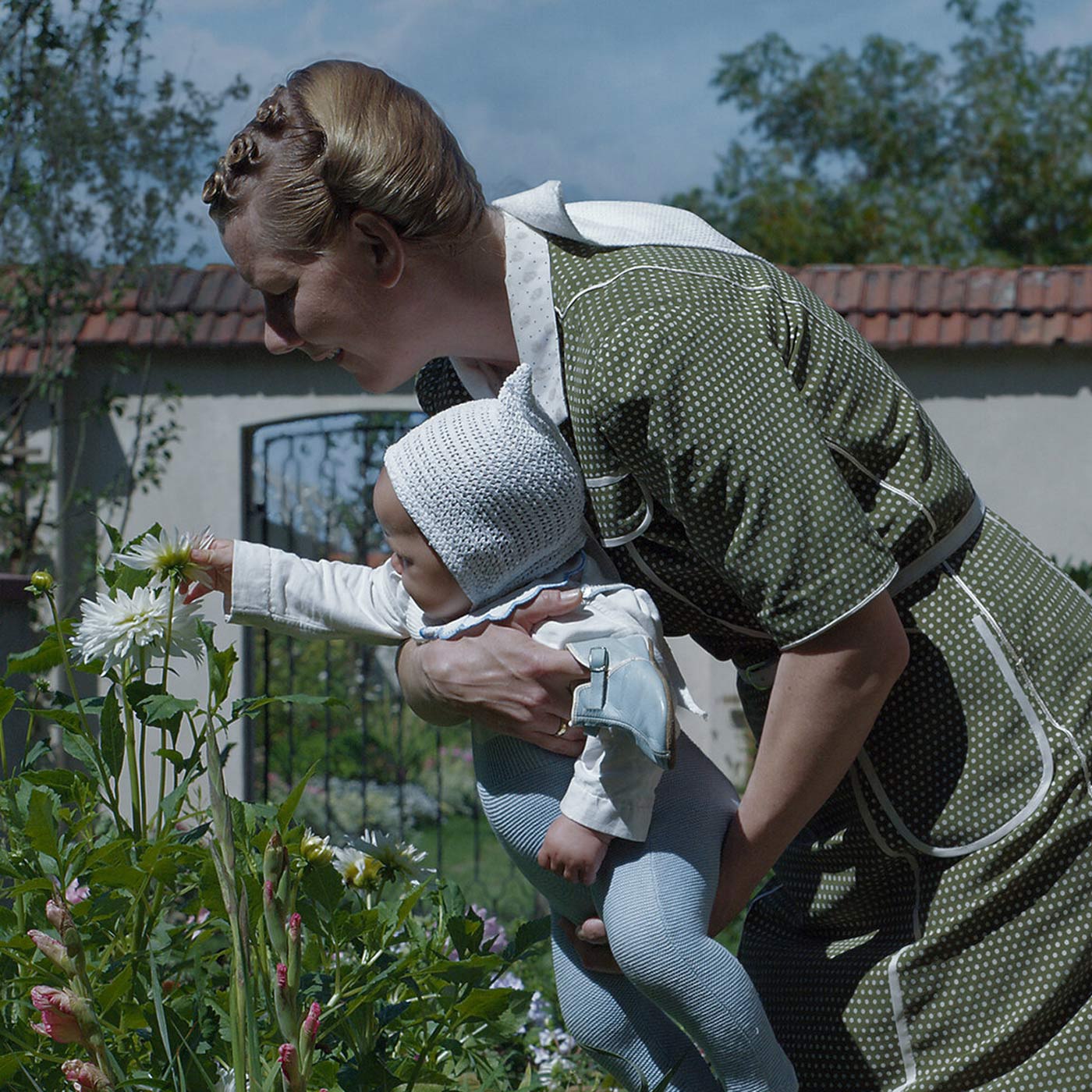
In The Zone of Interest, Jonathan Glazer constructed one of the most disturbing representations of violence in contemporary cinema through an apparently simple decision: not to show what, in any other film about Auschwitz, would occupy the center of the image. Rudolf Höss and his family’s house stands beside the concentration camp; behind the walls, a machinery of extermination is at work, something we almost never see but which remains constantly present through sound. Gunshots, screams, trains, engines, orders, and the movements of soldiers permeate the characters’ domestic lives, while the garden continues to be tended, the children play, and the family makes plans for its holidays. The film finds in this coexistence of normality and horror a particularly precise way of speaking about the relationship between perception, knowledge, and indifference. Violence does not need to be unknown in order to be ignored: it can be perfectly present, audible, even part of the everyday landscape, and still remain outside the field of attention.
Glazer’s procedure takes on an even greater dimension when viewed from the present. The Zone of Interest was released in 2023, at a moment when the circulation of images of war, displacement, and destruction had already profoundly transformed our relationship with the representation of violence. Since then, that condition has become even more extreme. War appears every day on phone screens, social media, live broadcasts, images captured by civilians, journalists, surveillance cameras, and drones. The distance between an event and the person watching it can be reduced to a matter of seconds. At the same time, this proximity produces a paradox: the more images we have available, the more difficult it can become to sustain our attention on any one of them. The contemporary problem of representation is no longer simply about obtaining images of what is happening, but about determining what we do with a practically unlimited number of images constantly competing for our gaze. In this sense, The Zone of Interest can be understood as a film about attention. The Höss home functions as a space organized around a carefully managed distance. The camp is immediately behind the wall, but family life is constructed in such a way that this proximity can be incorporated into the routine without interrupting it. Hedwig Höss can tend to her garden, receive visitors, talk about clothes, or imagine a more comfortable family life while, only a few meters away, one of the largest extermination operations in modern history is taking place. The most disturbing aspect of the film lies precisely in the fact that its characters do not live in ignorance. They hear the sounds. They perceive the smoke. They know the nature of what is happening. The information is there, but it can be absorbed into an everyday structure that allows them to go on living as though it belonged to another dimension.
The film thus transforms the off-screen space into a moral question. What we do not see does not disappear; on the contrary, it acquires a constant presence. The spectator has to mentally reconstruct what the camera chooses to keep outside the frame, and that operation radically alters their position. Instead of receiving a representation of horror, they have to coexist with its absence. The sound work by Johnnie Burn plays a decisive role in this construction. During production, an enormous amount of sound material was developed to imagine what might have been heard from the Höss home, and Glazer came to describe sound as a kind of second film. The extermination camp remains invisible, but its existence dominates the cinematic experience. In this way, the film achieves something that an explicit representation would be unlikely to produce: it turns the absence of images into a form of presence.
The operation becomes particularly relevant at a time when violence no longer needs to be introduced by cinema. Before a film reaches a theater, the spectator may already have seen hundreds of images of the event that the film is attempting to understand. Images of war circulate immediately and fragmentarily, detached from any stable temporal context. A photograph may appear alongside an advertisement, a video of destruction may be followed by a cooking recipe, and a live broadcast may share the same screen with a private conversation. The experience of looking is shaped by a speed that makes it difficult to establish hierarchies among images. A historical event and everyday content can occupy exactly the same space within an interface.
Faced with this situation, an important part of contemporary cinema seems to have begun working around a different question: what can a film do when images of horror already exist in immense quantities? No Other Land, directed by Basel Adra, Yuval Abraham, Rachel Szor, and Hamdan Ballal, constitutes one of the most striking examples of a strategy opposite to Glazer’s. The film is built from years of footage recorded in Masafer Yatta and turns these accumulated images into a cinematic archive of the destruction of Palestinian communities. Its power depends precisely on the need to show, preserve, and organize what might otherwise disappear from memory. The contrast with The Zone of Interest is productive because both films begin from different problems within the same discussion: what does it mean to film violence that is taking place before our eyes, and what place can a camera occupy when reality is already saturated with images? The difference between showing and withdrawing the image also allows us to consider a broader transformation in political cinema. For much of the twentieth century, one of the fundamental functions of documentary and committed cinema was to make visible what remained hidden. The camera had to reach places where power attempted to prevent its presence, record what did not appear in official media, and offer images capable of functioning as evidence. That function remains indispensable, but the contemporary ecosystem introduces an additional difficulty: visibility alone no longer guarantees that an image will produce understanding. An image can circulate millions of times and yet remain completely detached from the historical conditions that would allow it to be interpreted.
Cinema can intervene precisely at this point. Its specificity no longer necessarily lies in producing the first image of an event, but in organizing time around the images that already exist. A film can recover scattered footage, restore its context, establish relationships between different moments, linger on a face for several minutes, or construct a narrative capable of resisting the speed with which those images circulate outside the theater. It can also do the opposite and withdraw the image, allowing the spectator to experience what remains outside the frame. In either case, the central question is no longer exclusively what we see, but how we see.

The subsequent trajectory of some of the filmmakers connected to these films demonstrates that this concern cuts across different cinematic forms. The new work by Yuval Abraham and Rachel Szor, presented in the context of the upcoming edition of the Venice Film Festival, continues an investigation into contemporary violence and the mechanisms that allow it to be documented and understood. The presence of Jonathan Glazer as executive producer once again establishes a link between different cinematic approaches to representing the present. More than a strict thematic continuity, what is interesting is the persistence of the same concern: finding a cinematic form capable of confronting a reality in which violence no longer needs to be discovered by a camera in order to become an object of representation.
This shift also affects the relationship between fiction and documentary. Some of the most important political films of recent years operate in an intermediate zone in which documentary footage, archival material, journalistic investigation, and the tools of fiction begin to share procedures. The Zone of Interest uses a fictional structure to produce an experience that feels almost documentary in its observation of everyday gestures. No Other Land draws on images recorded over the course of years, but organizes them with an extremely precise narrative and formal awareness. In both cases, the cinematic form determines what kind of knowledge an image can produce.
The discussion is particularly urgent because artificial intelligence, manipulated videos, and the proliferation of synthetic images are introducing a new layer of uncertainty. The question of whether an image actually shows what it claims to show is beginning to occupy a central place in our everyday experience. Cinema, which for decades has grappled with the relationship between image and reality, once again finds itself facing a fundamental problem: what does it mean to believe in an image? The difference is that now doubt can arise even before we ask what the image represents. The Zone of Interest takes on an unexpected contemporary relevance. Its greatest formal discovery lies in reminding us that an image does not need to show everything in order to produce knowledge, and that what remains outside the frame can be as important as what occupies the screen. The film forces us to listen to a reality we cannot see and, above all, to recognize that the absence of an image does not mean the absence of the event. The spectator knows that something is happening behind the wall because the film creates the conditions for that knowledge to exist.
The challenge for contemporary cinema, then, is to find a new relationship between image and attention. When violence is permanently available on our screens, a film can attempt to create a space in which looking once again becomes a conscious activity. It can work with silence, duration, archival material, observation, or absence. It can show what needs to be preserved or withhold what would become spectacle if represented directly. It can transform a collection of scattered images into a temporal experience capable of producing memory.
After The Zone of Interest, the question of how to film violence is inevitably linked to another question: how to make an image worth looking at again. In an age saturated with images, that task acquires a political dimension. The problem is no longer simply to cross the wall and reach what remains hidden. It is also to create the conditions for someone, once the image appears, to decide to stay with it.