

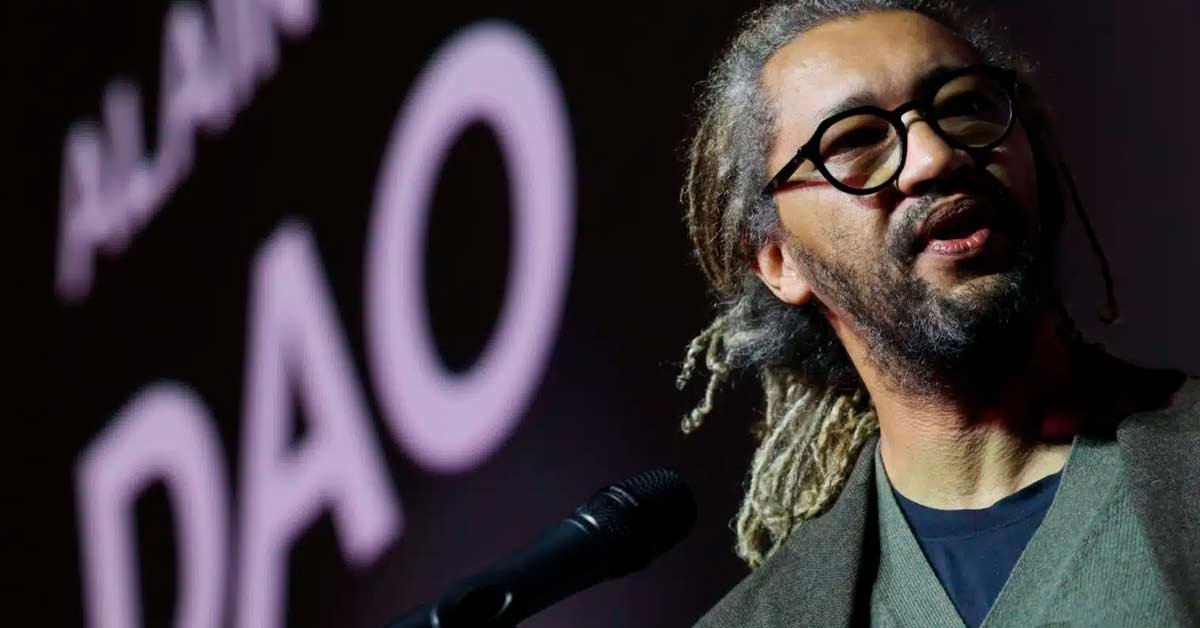
French filmmaker Alain Gomis’s Dao won the Golden Spike for Best Film at the 71st edition of the Valladolid International Film Festival (Seminci). The jury awarded the Silver Spike to La Gradiva, the debut feature by Marine Atlan, among the main distinctions of an edition that brought together a wide range of international filmmaking and approaches to contemporary cinema.
Running close to three hours, Dao unfolds as a family saga connecting two geographical and cultural settings: a wedding in France and an ancestral memorial ceremony in Guinea-Bissau. Bringing together professional actors and non-professional performers, Gomis creates a work that moves between fiction and documentary, exploring family bonds, memory and different notions of belonging. The film premiered in competition at the Berlin International Film Festival and marks the director’s return to fiction features following Félicité, which received the Grand Jury Prize at the Berlinale in 2017.
Meanwhile, La Gradiva follows a group of French teenagers on a school trip to Naples and Pompeii. Through this journey, Atlan examines the tensions surrounding the end of adolescence, the awakening of desire and the uncertainties that accompany the transition into adulthood. The French-Italian co-production had already received the Grand Prix at Cannes Critics’ Week and the Bright Horizons Award at the Melbourne International Film Festival. In Valladolid, it also secured the Best Editing Award for Guillaume Lillo and the Rainbow Spike, which recognizes films addressing LGBTQ+ themes.
The main competition also brought recognition for Argentine filmmaker Lisandro Alonso, who received the Ribera del Duero Award for Best Director for Double Freedom, a continuation of his debut feature Freedom. The filmmaker, whose credits also include Jauja and Eureka, adds another international distinction to his career with a film represented internationally by Luxbox.
In the acting categories, Alba Rohrwacher won Best Actress for her performance in Stéphane Brizé’s A Good Little Soldier, while Swann Arlaud received the Best Actor award for Emmanuel Marre’s A Man of His Time. The latter also earned the Best Cinematography Award for Olivier Boonjing. The Best Screenplay prize went to Sandra Wollner’s Everytime, a film exploring grief and memory through the possibilities of digital technology. Tiago Guedes’s Aquí received a special mention.
Beyond the official competition, the Meeting Point section awarded its main recognition to 9 Temples to Heaven, by Thai filmmaker Sompot Chidgasornpongse, who makes his fiction feature debut after an extensive career collaborating with Apichatpong Weerasethakul. Premiering at the Cannes Directors’ Fortnight, the film follows a family on a pilgrimage. The section also recognized Marc Ferrer’s Cinemanía, which received the Fundos Award, and Manon Coubia’s Forest High, winner of the ESCAC Best Director Award.
Spanish cinema received one of its major distinctions with Salen las lobas, the debut feature by Claudia Estrada Tarascó, which won both the Meeting Point Audience Award and the Seminci Youth Award. The film follows a group of girls living in a juvenile justice facility who find common ground through music and their shared dream of taking part in a trap competition in Barcelona. Produced by Alba Sotorra, the film is represented internationally by MoreThan Films.
In the Alchemies section, the Grand Prize went to Promised Spaces, directed by Ivan Marković, which examines the rapid transformation of Cambodia’s urban landscape. Another title recognized was Benigno, by David Baute, centered on an elderly man striving to preserve a way of life that is gradually disappearing in the Canary Islands. The film received both a special mention and the environmental Green Spike Award.
Finally, the Time of History section awarded its Grand Prize to Alea Jacarandas, a French-Algerian production directed by Hassen Ferhani, while Mariano Llinás’s The Life of Jorge Luis Borges received the section’s Special Award.