

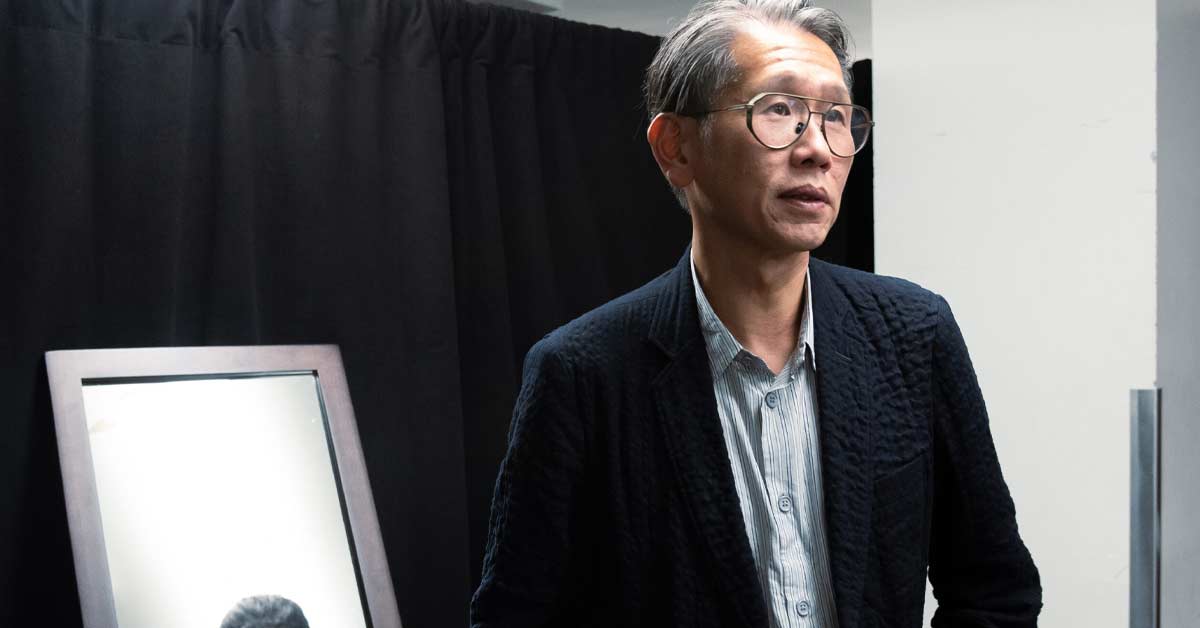
Just days before the start of the 64th edition of the New York Film Festival, which runs from September 25 to October 12, the festival’s Artistic Director, Dennis Lim, explained in a conversation published by Film at Lincoln Center [FULL INTERVIEW] how the festival’s program is built and what criteria guide its film selection.
The New York Film Festival was never conceived as a competitive festival or as a showcase focused on world premieres. “It has always been a festival that surveys the year in cinema,” Lim explained. For him, the fundamental question remains the same: “How do we make an argument for cinema? What films do we put together to convey what’s exciting, what’s interesting about the art form today?”
The selection process for this year’s edition began in January, with films heading to Sundance and Berlin, while Cannes titles began arriving in March and April. The team works with different committees for Main Slate, Spotlight, Currents, and Revivals, holding regular meetings throughout the year. Some films are still in post-production when they are seen, although Lim notes that filmmakers generally wait until their work is almost finished before showing it. The selection process is not necessarily driven by commercial expectations or awards-season conversations. “Sometimes we see a film and recognize perfectly well that it’s going to be an awards film, but we don’t necessarily think it has a place in the program,” he said. Nor does Lim believe there is a single audience to satisfy: “We have many different audiences, with different interests.” For that reason, he added, “I don’t really believe in second-guessing the audience.”
Auteur cinema remains one of the festival’s primary perspectives, and Lim acknowledges that there are filmmakers the team particularly follows. “Obviously we have favorites. I think it would be disingenuous to say we don’t.” However, a filmmaker’s previous history with the festival does not guarantee selection. “It’s never, ‘So-and-so has a new film, they’re definitely going.’ We always have to see the film and then have a discussion about it.” Half of this year’s Main Slate directors are new to the section, something Lim considers important to avoid repeatedly programming the same filmmakers. “Who made it is a factor, but ultimately I feel like we’re really looking at what’s on the screen,” he said.
U.S. distribution is not a requirement either. In fact, several films arrive in Currents without distribution secured. Being included in the festival can nevertheless help their subsequent release: “Putting a film in the Main Slate gives it a bit of a boost and helps it with distribution in the U.S.”
Among the particularities of this year’s edition are several late additions. Lim explained that NAZA, You Can See Everything, by Nathan Fielder and Lance Oppenheim, and Cameron Winter at Carnegie Hall, by Paul Thomas Anderson, had not been announced when they were added to the lineup. “When I saw the films, I was sworn to secrecy. I couldn’t tell anyone that these films existed.” Artificial, by Luca Guadagnino, was also added later following a change in distributor.
Lim also believes that some films can receive a different response in New York after premiering at Cannes. According to him, the pace of the French festival does not always allow for sustained reflection, with critics, buyers, and programmers constantly moving from one film to another. Among the films he hopes will be rediscovered this year is Arthur Harari’s The Unknown. His recommendations for this edition also include The Loneliest Man in Town, I Rarely Wake Up Dreaming, My Wife Cries, Joy of Joys, by Jonathan Glazer, as well as several titles from Currents and Revivals.
With the 64th edition still ahead, Lim is already keeping an eye on new films by filmmakers including Albert Serra, Apichatpong Weerasethakul, Hong Sang-soo, Todd Haynes, Bertrand Bonello, and Alice Rohrwacher. But the process will begin again from scratch once the festival ends. “One thing this year demonstrated to me is that there were films that were real surprises,” he said. And that brings the conversation back to the question that, for Lim, defines the work of programming: “How do we make an argument for cinema?”