

Who Owns a Nation’s Memory? On Fatherland, by Paweł Pawlikowski
“A nation’s memory is shaped by inherited narratives, unresolved responsibilities, and ideological disputes. In Fatherland, Paweł Pawlikowski examines how a society attempts to rebuild its identity while confronting the consequences of Nazism.”
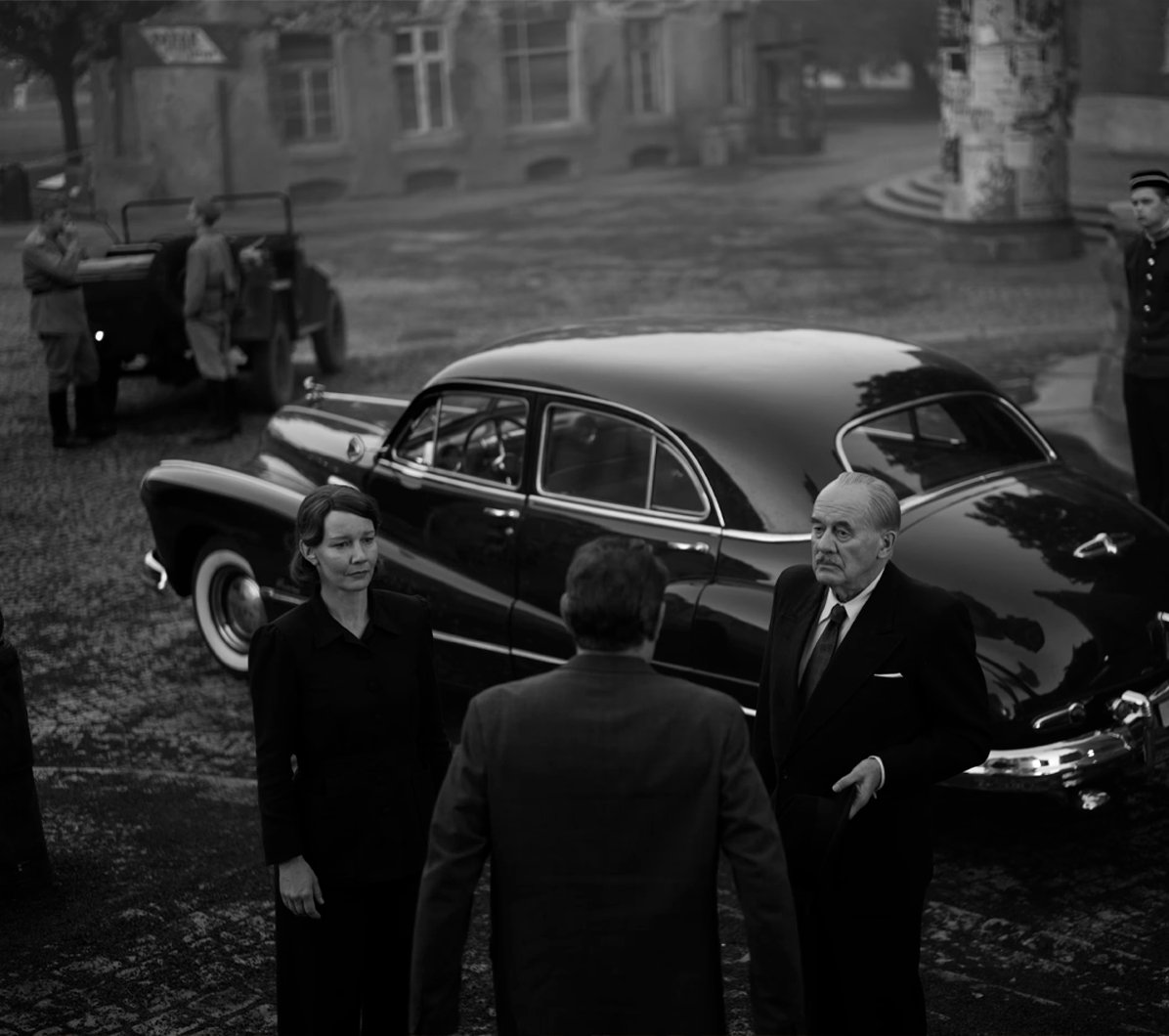
In the Europe emerging from the Second World War, the reconstruction of a nation entails a struggle over the meaning of its past. Cities must reclaim their spaces, institutions reorganize public life, and families learn to live with the consequences of a catastrophe that has forever altered their bonds. Germany bears a historical responsibility that extends beyond military defeat: Nazism turned extermination, persecution, and obedience into central components of a political project that implicated broad sectors of society. Against this backdrop, Fatherland, Paweł Pawlikowski’s film centered on Thomas Mann and his daughter Erika during a journey through postwar Germany, poses a decisive question for understanding the relationship between cinema, history, and national identity: who has the authority to tell the story of a country still struggling to understand what it has done?
The journey takes on a political dimension because Germany is divided between American and Soviet spheres of influence. Each territory organizes its present according to an interpretation of the conflict that has just ended, while the past remains a difficult legacy to manage. The defeat of Nazism opens the possibility of profound transformation, yet the construction of a new German identity requires establishing responsibility, acknowledging victims, and examining the social conditions that enabled the rise of fascism. National memory thus becomes a field of competing forces involving victors, defeated populations, exiles, and those who remained in the country. Each group possesses different experiences, interests, and languages through which to explain the catastrophe.
Thomas Mann occupies a singular position within this conflict. His intellectual career and opposition to Nazism place him among the figures called upon to participate in Germany’s moral reconstruction. The writer embodies a highly prestigious cultural tradition, a legacy the Nazi regime had attempted to appropriate while destroying the conditions of freedom necessary for its existence. His figure reveals a profound contradiction in German history: the distance between the international recognition of its culture and the violence perpetrated in the name of the nation. Literature, philosophy, and music had contributed to an image of Germany associated with education and intellectual life; Nazism demonstrated the extent to which this heritage could coexist with the dehumanization of millions of people. The question of cultural responsibility therefore runs through every attempt to recover national pride.
Erika Mann’s presence introduces another perspective. The relationship between father and daughter creates a space in which to consider how memory is transmitted across generations and how interpretations of the past change when personal experience encounters the demands of history. Both belong to the same family and share a privileged position within European culture, although their experiences and ways of engaging with the world may lead them to different understandings of responsibility. The journey allows memory to be imagined as a conversation shaped by disagreements, affections, and moral judgments. Later generations inherit stories, documents, and testimonies, but they also inherit questions their elders left unanswered. Historical transmission depends as much on what is preserved as on what each era chooses to examine anew.
Germany’s territorial division makes this process even more complex. The Allied occupation organizes the country according to geopolitical interests that will soon shape the Cold War. European reconstruction becomes linked to two ideological projects seeking to establish their legitimacy through the defeat of fascism. The United States and the Soviet Union participate in Germany’s reorganization while developing their own narratives of victory, sacrifice, and the future. In this context, historical memory also becomes a diplomatic instrument. Narratives of Nazism influence the formation of new alliances and the legitimization of political systems aspiring to shape Europe’s future. The question of German responsibility becomes inseparable from another: who can establish the conditions under which a society can once again recognize itself as part of the international community?
Pawlikowski finds a cinematic possibility in this tension. His interest in the fractures of European history runs throughout a filmography in which geographical displacement often accompanies transformations of identity. In Ida and Cold War, characters move through spaces marked by political conflicts that penetrate their private lives, shape their decisions, and alter their relationships. History acquires a tangible presence through bodies, journeys, silences, and encounters. Fatherland extends this concern by placing the problem of memory within a divided geography, where each territory seems to offer a different interpretation of what has just happened. The journey reveals how political borders influence the act of remembering and how individual experience becomes subject to the collective narratives seeking to organize it.
Cinema occupies a particular position in this discussion because it works with images capable of creating a sensory experience of the past. Archives, photographs, buildings, and landscapes preserve traces of events that can never be fully recovered. A historical film selects these traces, arranges them, and establishes relationships among them. Every frame proposes a perspective; every ellipsis determines which events remain offscreen; every narrative decision distributes responsibility and establishes distances between characters and viewers. Representing the past therefore requires an awareness of the medium’s own procedures. Cinema can contribute to the development of critical memory, but it also participates in the production of reassuring images that turn historical conflicts into easily consumable narratives.
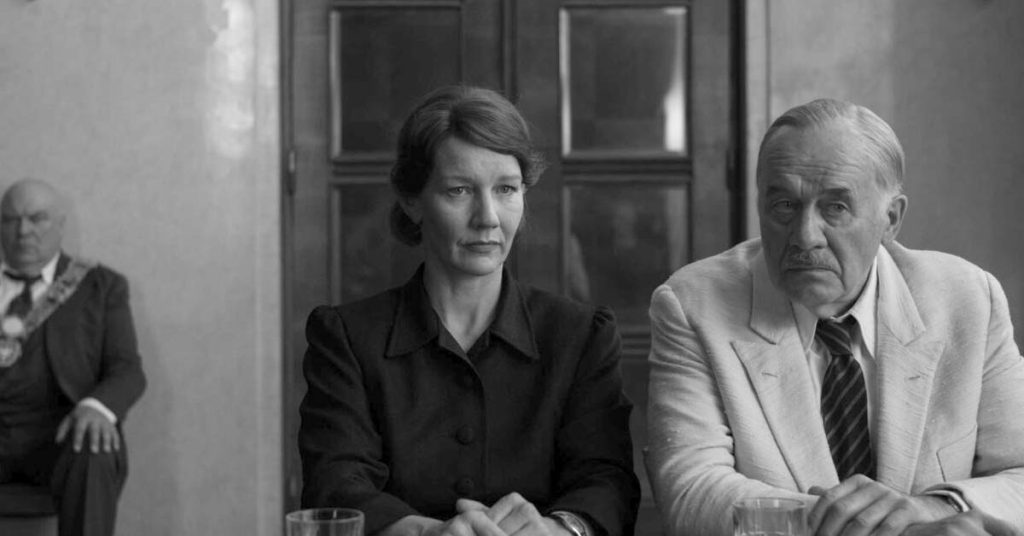
Postwar Germany offers a particularly complex example of this process. Material and economic reconstruction requires a degree of social stability, while confronting the responsibilities of Nazism demands a prolonged examination of institutions, complicity, and the everyday forms of obedience. Societies need to establish a shared horizon in order to move forward, but that horizon depends on how they incorporate the experiences of those who suffered persecution. Forgetting can function as an informal condition of reconciliation when victims are expected to live alongside those responsible without sufficient acknowledgment of what happened. Memory, by contrast, introduces a persistent discomfort: it compels societies to reconsider the foundations of their collective identity and accept that the past continues to shape the present.
Thomas Mann’s figure also makes it possible to examine the role of intellectuals during political crises. Culture often appears as a reservoir of values capable of resisting barbarism, although its prestige can also serve to conceal a society’s contradictions. The existence of great writers, musicians, and thinkers never guarantees a democratic consciousness. The relationship between culture and politics requires examining the conditions under which works are produced, the institutions that sustain them, and the uses to which political powers put them. In defeated Germany, reclaiming a cultural tradition means deciding which aspects of that legacy deserve to be celebrated and which must be reconsidered in light of their coexistence with nationalism and authoritarianism. Cultural memory acquires critical value when it is willing to subject its own heritage to scrutiny.
The distance between exile and the territory to which one wishes to return also matters. Those who left Germany during the Nazi era maintained a relationship with their country shaped by loss, indignation, and the expectation of transformation. Returning offered the possibility of participating in reconstruction, but it also meant encountering a society whose experiences had unfolded under different conditions. From exile, the nation could retain an image associated with language, literature, and personal memories; on the ground, that image had to confront the material and moral ruins of the regime. Displacement thus changes the authority of those who remember. National belonging depends on emotional and cultural ties, but also on the ability to recognize the transformations undergone by the place to which one hopes to return.
The question posed by the title retains its full force because a nation’s memory never belongs entirely to a single generation, institution, or public figure. States produce commemorations and educational programs; historians establish relationships between documents and testimonies; artists seek forms capable of conveying experiences that resist definitive explanation. Victims demand recognition, while later generations revisit inherited narratives and confront their omissions. These interventions can come into conflict, and that conflict is a fundamental part of democratic life. Collective memory needs spaces where official versions can be challenged, individual and structural responsibilities can be investigated, and silenced experiences can find forms of expression.
In Fatherland, the journey through postwar Germany allows this process to be understood as an open-ended experience, shaped by tensions between family intimacy and political history, cultural inheritance and moral responsibility, national belonging and exile. Rebuilding a country requires buildings, institutions, and agreements, but it also demands a rigorous engagement with the forces that made its destruction possible. Pawlikowski places this demand within a journey in which borders and memories become part of the same struggle. The homeland emerges as a historical construction that each generation inherits under particular conditions and must reinterpret. Its memory acquires legitimacy when it can accommodate uncomfortable questions, acknowledge the suffering it produced, and examine the responsibilities that made the catastrophe possible. Remembering, in this sense, is a way of deciding what kind of community can be built upon the ruins of the past.