Tender Loving Care (2026), by Mike Leigh
"Es en los momentos compartidos, en la complicidad de las miradas y en los silencios incómodos pero amorosos, donde el largometraje alcanza sus mayores picos de intensidad dramática."

The Everyday Miracle of Compassion
The announcement that this feature film could mark the British filmmaker’s farewell to cinema only heightens the impact of its existence: we are witnessing a small miracle born of urgency, honesty, and the purest form of creative resistance. Far from easy nostalgia, the narrative draws us into an intimate story that captures the very essence of the human condition, functioning as a perfect distillation of an ethical vision that has always known how to find the extraordinary within the everyday.
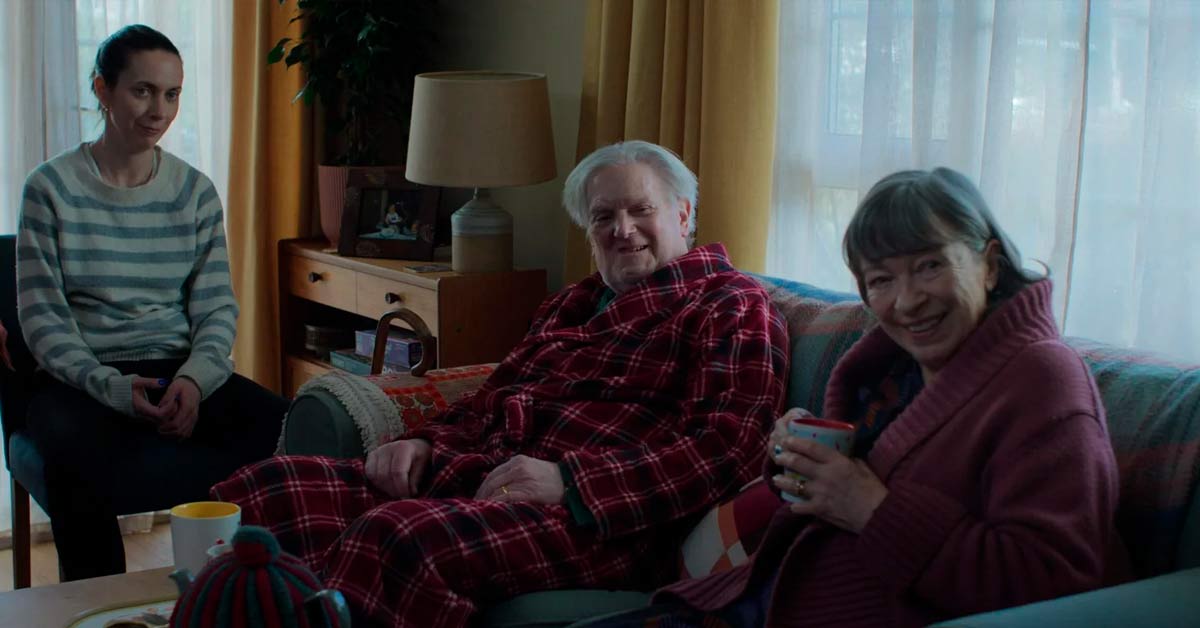
The story takes us into the world of a working-class family in London. It follows Amy, a social worker devoted to vulnerable children, and her close friend Rosie, who works caring for the elderly. When the demands of their professions give them a brief respite, the two find refuge in Amy’s childhood home, where her parents are experiencing the final stage of their lives with a serenity as modest as it is precious. From this web of relationships, the film transcends the mere domestic portrait to become a sincere tribute to those who devote their lives to supporting others, sustaining an emotional structure that unfolds with patience and moving maturity.
One of the film’s greatest strengths lies in its narrative structure. Dissolving conventional dramatic arcs, the story prefers to flow through episodes of everyday life, allowing the audience to inhabit the very heart of these characters’ existence. This is observational cinema that understands life as an indivisible combination of joy and melancholy. Despite the harshness of the themes underlying the story—loneliness, the erosion of the social welfare system, or the indelible impact of the passage of time—the gaze guiding the narrative firmly refuses pessimism. There is a constant search for warmth and involuntary humor, the kind that emerges spontaneously in the midst of the most difficult conversations to remind us of the beauty of the present.
The emotional force of this journey rests on the profound connection among the cast. The communal dynamics between the central family unit and Rosie, who has effectively become an unofficial third daughter, create a map of indestructible affections. The performances feel organic and transparent, the result of a methodology in which character construction takes precedence over artifice. It is in the shared moments, in the complicity of glances and in the awkward yet loving silences that the film reaches its greatest peaks of intensity. Each performer inhabits their space with disarming truth, making empathy for their joys and uncertainties immediate and lasting.
Toward its final stretch, the film offers devastating reflections on fragility and mutual commitment, culminating in a conclusion of almost prophetic lucidity that speaks directly to the viewer. In a present worn down by indifference, the film stands as a desperate yet luminous appeal to elemental compassion. It is a celebration of the small bonds that make life worth living, a mature embrace that invites us to look beneath the surface of our own routines. If this is truly the final point of an exemplary career, it would be difficult to imagine a more coherent, moving, and profoundly human finale.