

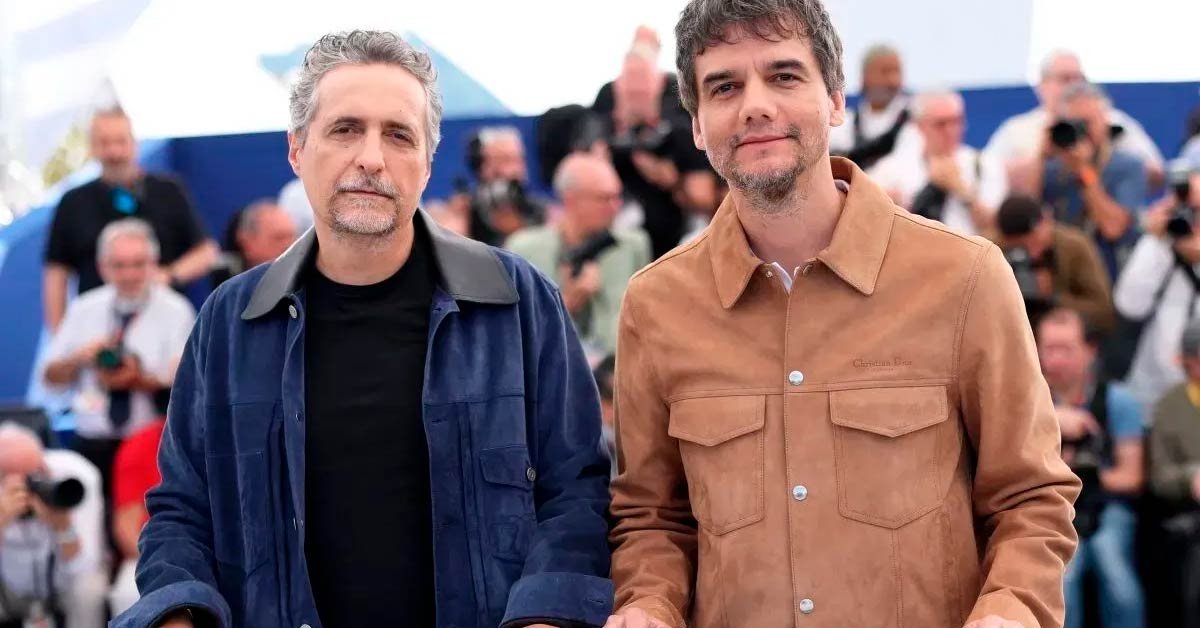
Kleber Mendonça Filho, Wagner Moura, Fernando Meirelles, Petra Costa, Alice Braga and producer Rodrigo Teixeira are among the signatories of an open letter calling for international attention ahead of Brazil’s presidential runoff, scheduled for October 25. The letter warns of the potential consequences of a victory by far-right candidate Flávio Bolsonaro, son of former president Jair Bolsonaro.
The letter brings together several Brazilian members of the Academy of Motion Picture Arts and Sciences in Hollywood, including filmmakers, actors and producers associated with the country’s contemporary cinema. Other signatories include Emilie Lesclaux, Alê Abreu, Karim Aïnouz, Sônia Braga, Gabriel Mascaro, Carolina Markowicz, Anita Rocha da Silveira, Anna Muylaert, Laís Bodanzky and Ilda Santiago, director of the Rio de Janeiro Film Festival.
In the document, the signatories call for “close international attention” to the electoral process and express concern over Flávio Bolsonaro’s recent statements pledging to rewrite Brazil’s 1988 Constitution. The initiative also refers to allegations of possible U.S. interference in the first round of voting, following an investigation published by The Guardian that reported the allocation of approximately US$1 million by the U.S. State Department to a program called “Countering Lawfare and Censorship in Brazil.”
“We see the developments unfolding in Brazil as part of a broader pattern of alleged electoral interference across Latin America,” the letter states.
The runoff will pit incumbent president Luiz Inácio Lula da Silva against Flávio Bolsonaro. His father, Jair Bolsonaro, is serving a 27-year-and-three-month sentence under house arrest for his role in a coup plot following his defeat in the 2022 presidential election.
The initiative adds to warnings from various sectors of Brazil’s audiovisual industry about the future of cultural policies and film financing in the country. A recent Variety report examined the dismantling of the audiovisual sector under Jair Bolsonaro’s administration and warned that a potential victory by his son could bring another setback for Brazilian cinema.
LETTER
We, Brazilian film professionals and members of the Academy of Motion Picture Arts and Sciences in Hollywood, wish to express our concern over the current political climate in Brazil and call for close international attention to the second round of the presidential election on October 25.
The margin between the two candidates in the first round was just 1.87 percentage points. Brazil is therefore a deeply divided country. We are nonetheless witnessing troubling signs of disregard for democratic norms, including allegations of possible foreign interference in Brazil that warrant transparent investigation and international scrutiny.
The Guardian has reported that the United States government allocated approximately US$1 million from a State Department human rights fund to a program called “Countering Lawfare and Censorship in Brazil.”
At the same time, media observers have raised concerns about possible distortions in the reach of political content on Meta platforms and have called for an investigation. Among the cases cited are the Instagram accounts of President Luiz Inácio Lula da Silva, which have reportedly experienced declines in reach, difficulties with access and visibility in search results, as well as an inability to promote posts through paid advertising. Another case involves a US-based website promoting the purchase of advertisements in support of candidate Flávio Bolsonaro in exchange for cryptocurrency tokens, under the promise of helping underprivileged children in Uganda. Brazil’s Federal Police are also investigating suspicions of cash payments to voters in rural areas.
Several of Flávio Bolsonaro’s proposals also warrant close scrutiny, including his pledge to rewrite Brazil’s 1988 Constitution, which marked the end of military dictatorship and the restoration of democracy in the country. According to the candidate, a new constitution would be drafted by a Congress dominated by a far-right majority. This statement is particularly troubling in light of the attempted coup attributed to former president Jair Bolsonaro, the candidate’s father. The plot included plans to assassinate the current president, Luiz Inácio Lula da Silva, and his vice president, Geraldo Alckmin. Jair Bolsonaro is imprisoned in connection with this case, while his son has pledged to grant him amnesty as his first act in office.
Our concern is compounded by the way much of Brazil’s mainstream media has normalized these developments, failing to address with the seriousness they deserve the allegations against Flávio Bolsonaro and the crimes attributed to his father. In addition to the attempted coup, Jair Bolsonaro was the subject of a complaint filed with the International Criminal Court in The Hague over the more than 600,000 COVID-19 deaths recorded in Brazil during the pandemic, amid actions and omissions by his administration. The complaint argues that more than half of those deaths could have been prevented.
His administration was also associated with Brazil’s return to the United Nations’ Hunger Map. Now, his son is promising cuts to social security spending modeled on the austerity policies of Javier Milei’s government in Argentina. The omission or downplaying of these facts contributes to public misinformation and undermines the defense of democracy.
As cultural professionals, we understand the cost these austerity policies can impose on our sector. Under the previous administration, Brazil’s audiovisual industry suffered from the closure of the Ministry of Culture, the suspension of the Audiovisual Sector Fund, the weakening of cultural institutions, and allegations of censorship. We fear a return to that scenario. Protecting freedom of expression and ensuring the long-term sustainability of Brazil’s audiovisual industry are inseparable from defending democracy.
We see the developments unfolding in Brazil as part of a broader pattern of alleged electoral interference across Latin America. The defense of Brazilian democracy must therefore rest not only with the Brazilian people, through free, fair and transparent elections, but also with the vigilance and engagement of the international community.
We call on the international press to cover this electoral process rigorously, on the international audiovisual community to amplify the debate, and on the relevant institutions to investigate these allegations independently.
Adrian Teijido
Alê Abreu
Alice Braga
Andrea Barata Ribeiro
Anita Rocha da Silveira
Anna Muylaert
Anna Van Steen
Bernardo Uzeda
Carlos Segundo
Carolina Markowicz
Claudia Kopke
Daniel Filho
Daniel Rezende
Daniela Thomas
Eduardo Serrano
Eliza Capai
Emilie Lesclaux
Emilio Domingos
Felipe Lacerda
Fernando Meirelles
Flávia Amon
Flávia de Souza
Gabriel Domingues
Gabriel Mascaro
Heitor Lorega
Helena Solberg
Heloisa Passos
Ilda Santiago
Jefferson De
Jordana Berg
Jorge Bodanzky
José Joffily
Julia Bacha
Juliana Rojas
Karen Akerman
Karen Harley
Karim Ainouz
Kleber Mendonça Filho
Lais Bodanzky
Lucy Barreto
Maeve Jinkings
Marcelo Caetano
Maria Augusta Ramos
Mariana Oliva
Matheus Farias
Maurício Zacharias
Miriam Biderman
Murilo Hauser
Otto Guerra
Paula Barreto
Pedro Kos
Petra Costa
Plínio Profeta
Renata Almeida Magalhães
Rita Azevedo
Rodrigo Teixeira
Sara Silveira
Sônia Braga
Tatiana Leite
Thales Junqueira
Vânia Catani
Vera Hamburger
Wagner Moura
Waldir Xavier
Wilssa Esser