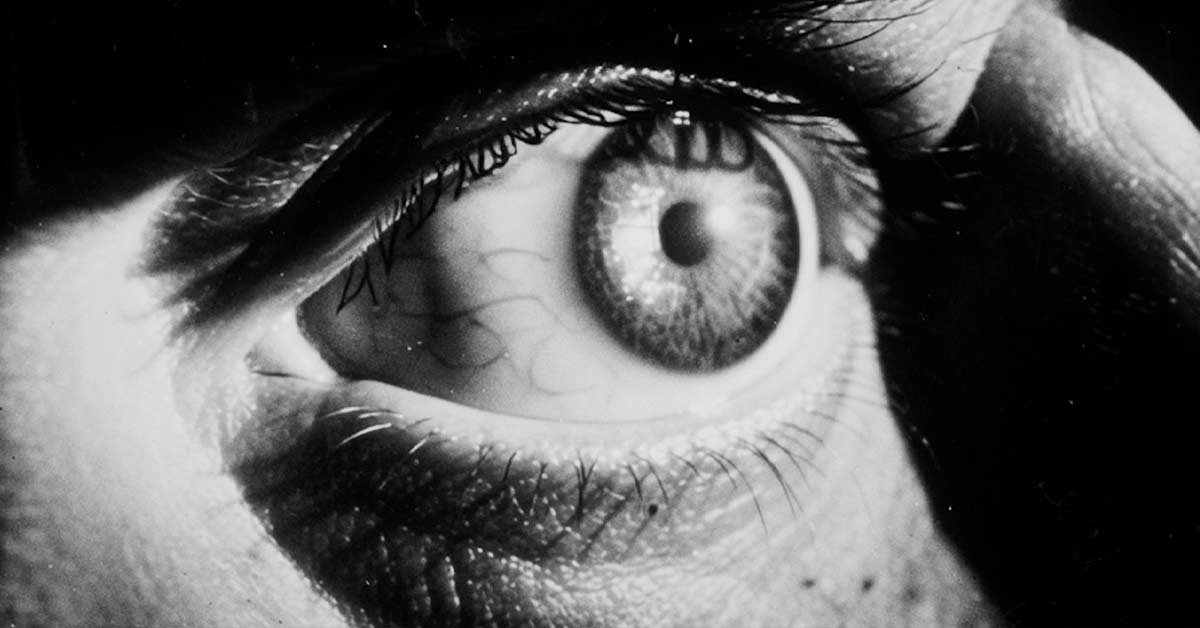
Guerrilha no Asfalto (2026), by Edgar Pêra
“The story is a grave one, but Pêra tells it not with solemnity but with the lucidity of someone who understands that fanaticism can be grotesque without ceasing to be lethal.”
The Revolution by Other Means
Edgar Pêra opens Guerrilha no Asfalto with a car chase that seems stolen from a Hollywood cop movie, set to Suicide’s “Ghost Rider,” that anthem of discontent hurled forward with no brakes. It is a statement of principles and also a trap: the film that follows looks nothing like the one that scene promises, though it keeps its temperature. Later on, the director will blow up the 25 de Abril Bridge with cars still driving across the deck, an image as believable as it is inconceivable. Pêra destroys reality to see what it holds inside, and he announces as much from the very first title card, which defines the film as a true story based on surreal facts. Its basis is Manuel Ricardo Sousa’s book on the Forças Populares 25 de Abril, the armed group that, throughout the 1980s, believed the Carnation Revolution had been left halfway done and that fascism was still lurking within Portuguese democracy. The story is a grave one, but Pêra tells it not with solemnity but with the lucidity of someone who understands that fanaticism can be grotesque without ceasing to be lethal.
There is a bank robbery the film returns to again and again, always seen through the building’s stained-glass windows, as if the perception of what happened were literally tinted by the glass through which it is viewed. The FP-25 militants come across as revolutionaries who read the ideological manuals but skipped the practical instructions, and the film allows itself to laugh when they try to steal a car that won’t start from a cranky old man, only to take our breath away moments later when Raul, a quiet, idealistic student, ends up lynched by the very crowd he believed he was liberating. That humor and horror coexist without canceling each other out is one of the film’s great achievements: Pêra absolves no one, but neither does he turn his characters into monuments, and he lets the clash between conviction and reality speak for itself.
Soon a second guerrilla war emerges, far less bloody, which belongs to the director himself. Guerrilha no Asfalto turns into autobiography in dialogue with Albano Jerónimo, a kind of interview with cinema itself as the projects Pêra was never able to shoot parade by, among them an adaptation of the same book attempted in the nineties, a film noir on the rooftops of Lisbon, the vertigo of Cassiano Branco’s Éden Cinema. There was too little money and too many ideas, and the film turns those closed drawers into living matter. It is also a survey of a body of work that, since the eighties, has refused to let a lack of budget switch off the camera, from Reproduta Interdita to Manual de Evasão LX94, from O Barão to Cartas Telepáticas, an overflowing and at times exasperating filmography, but impossible to mistake for any other. Even Terence McKenna returns, the psychedelic thinker who was once his accomplice, as a ghost warning about the invisible masters of the present. The political resistance of the FP-25 and the aesthetic resistance of a punk filmmaker thus face each other in an uncomfortable mirror, and the question hanging in the air is whether filming against the current can also be an act of insubordination, one that needs no weapons.
Artificial intelligence enters this collage without asking permission and without asking forgiveness. Pêra uses it as an extension of the editing, mixing it with archival footage, his own material from other decades, new shots and Godardian typography, until telling memory from invention becomes part of the viewer’s work. The device allows him to recover lost or never-filmed images, and in its final stretch it becomes a reflection on its own danger, on the way an image can look like a document without documenting anything at all. Few films have dared to use this tool and to interrogate it with such awareness.
The result is a frantic seventy-seven-minute ride that rarely stops to explain itself, one understood more through impact than through deduction. Some ideas go by so fast they can barely be glimpsed, but that speed is consistent with the feverish energy of the movement it portrays and with that of Pêra himself, for whom a domesticated cinema would be a contradiction. Over the credits, José Afonso sings “O Que Faz Falta,” a song that stirred consciences without blessing rifles. What’s needed, the film suggests, is a camera, a dose of madness and the stubbornness to keep filming even if the bridge comes down.