

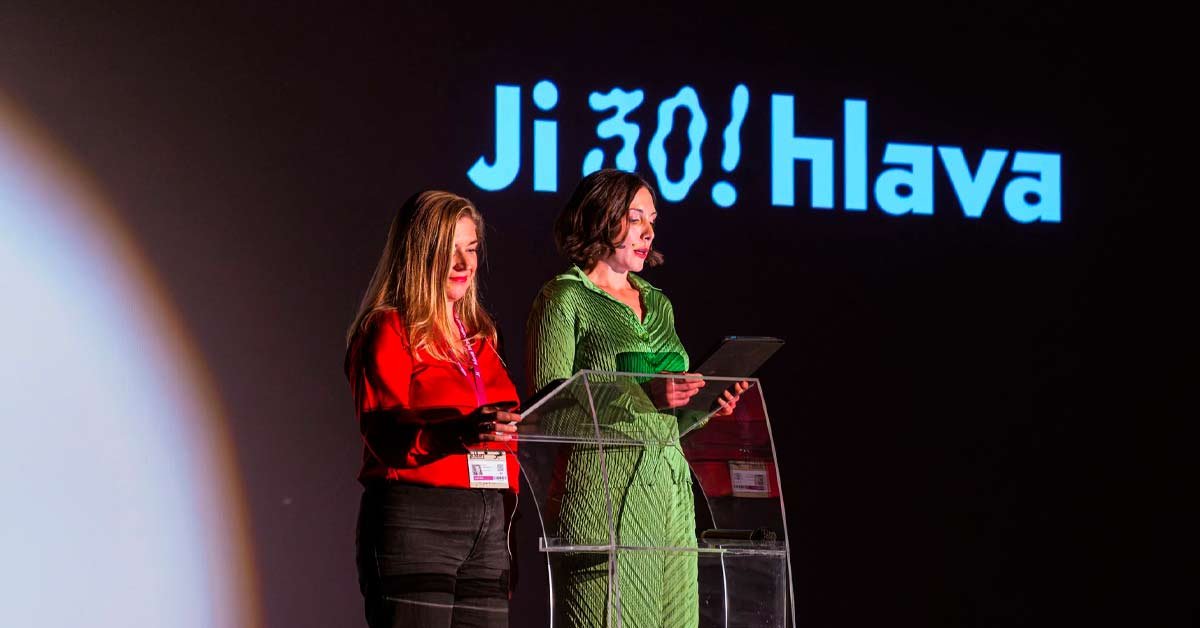
The Ji.hlava International Documentary Film Festival opened its 30th edition in the Czech Republic on Friday with a lifetime achievement award presented to filmmaker Helena Třeštíková and a screening of Návrat do neznámé země, Olga Malířová Špátová’s new documentary about choreographer Jiří Kylián. The festival runs through November 1, featuring more than 350 films, around one-third of which are world, international or European premieres.
Třeštíková received the award for her contribution to world cinema during the opening ceremony. Having attended the festival since its inaugural edition, she is one of the leading figures in Czech documentary filmmaking, particularly known for her long-term observational films, which document the transformations in her subjects’ lives over the course of decades.
Festival director Marek Hovorka highlighted the historical significance of her work, comparing her contribution to documentary cinema to Honoré de Balzac’s influence on literature. Upon receiving the award, Třeštíková defended the role of public-service media in audiovisual production and warned about the potential consequences of a reform to the funding system for Czech public-service broadcasting. The proposed legislation was brought before parliament amid protests in Prague on Friday.
The filmmaker explained that the continuity of her projects, some spanning ten, twenty or even forty years, had been made possible by the sustained support of public institutions. She warned that losing these guarantees would jeopardize filmmakers’ working conditions and the future of documentary cinema. She also emphasized the role of festivals as spaces that give this type of filmmaking meaning and relevance within society.
The festival’s opening film offers an intimate portrait of Jiří Kylián, the 79-year-old choreographer who emigrated in 1968 and went on to establish a distinguished career in Germany and the Netherlands. Directed by Olga Malířová Špátová, Návrat do neznámé země explores his artistic journey, his experience of exile and his life with German dancer Sabine Kupferberg, his partner of 53 years.
Shot entirely on the Dutch island of Terschelling, the documentary uses its dunes and landscapes as a setting for Kylián’s reflections on the passage of time, artistic creation and mortality. The film combines music by Beethoven, Debussy and Janáček with choreographic sequences conceived by Kylián himself, symbolically revisiting episodes from his childhood, his emigration, his longing for home and his love story.
Malířová Špátová, also known for her documentary portraits of musicians Karel Gott and Petr Janda, explained that the project involved an extensive editing process. She identified the relationship between Kylián and Kupferberg, shaped by both their shared creative work and their personal experiences, as one of the film’s central themes. Its underlying message, she said, is an invitation to live every moment to the fullest.
The festival’s anniversary edition will feature a second lifetime achievement award, to be presented to Vietnamese-born American filmmaker and theorist Trinh T. Minh-ha during the closing ceremony. For Hovorka, the 30th edition is also an opportunity to reflect on the festival’s history. Thousands of people have contributed to the event over the years, and the organization expects the cumulative number of accredited guests—including filmmakers, industry professionals, musicians, journalists and audiences—to surpass 100,000 this year. According to the festival’s estimates, total cinema attendance across its history has already exceeded one million.
Ji.hlava’s program includes international competitions, premieres and events dedicated to contemporary documentary cinema. The festival’s 30th edition runs through November 1.