The contemporary imperative to pursue personal goals often collides head-on with routine. The Debut (2026), Jesse Eisenberg’s third and most mature venture behind the camera, is built upon that divide. Loosely inspired by the director’s youth as an aspiring actor in 1990s New Jersey, the film moves away from the conventional coming-of-age narrative to offer a portrait that is both acerbic and moving of the nature of artistic vocation and the belated search for identity.
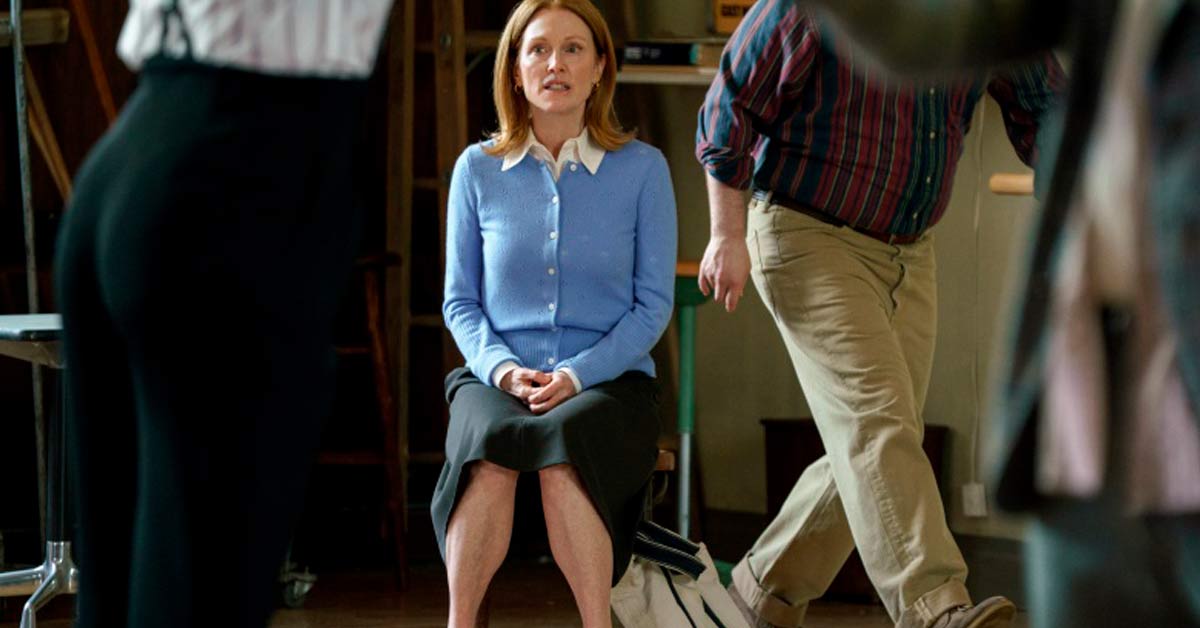
The story follows Mona Friedman, a suburban housewife whose existence unfolds in a state of everyday torpor, overshadowed by her family’s indifference. In a desperate attempt to find a space of her own, she decides to audition for a modest community theater production. To her own surprise, she lands a supporting role as the caretaker of a building in a musical set in an idealized version of New York. What initially promises to be a comforting refuge, however, quickly becomes turbulent when she encounters Jerry, an inflexible, volatile director whose demands put the protagonist’s emotional stability to the test.
Eisenberg avoids the genre’s conventions by refusing to indulge his characters. Rather than offering a sentimental tribute to the courage of reinvention, the narrative dismantles the myths surrounding the creative process, showing how an obsession with authenticity can push an ordinary person to the brink of alienation. As the protagonist immerses herself in acting through an extreme form of method acting, the boundaries between domestic reality and theatrical artifice begin to blur. This shift unfolds within an eerie magical-realist atmosphere, where everyday interactions take on an almost dreamlike rigidity that heightens the characters’ isolation.
The film’s weight rests on the performances of its central pair. Julianne Moore portrays a character of affecting fragility, moving convincingly from initial timidity to an overwhelming dramatic surrender. Her performance finds an ideal counterpoint in Paul Giamatti, who plays the director with outsized intensity, turning every rehearsal into a battle of wills. The dynamic between the two sustains the narrative’s momentum, oscillating between absurdist comedy and psychological tension. The supporting cast is rounded out by a series of brief appearances that sharply capture the eccentricities and tribulations of community theater ensembles.
Without losing its satirical tone, The Debut manages to balance the inherent ridiculousness of outsized ambitions with deep empathy for those desperately seeking to be seen. Eisenberg displays remarkable restraint in handling opposing emotional registers, ensuring that the humor never neutralizes the underlying melancholy. The result is an intelligent portrait of the human need for escape, the fascination with the mask, and the consequences of surrendering one’s sanity in exchange for a fleeting moment of recognition on the stage.