

Biography of Jorge Luis Borges. About Mariano Llinás, by Mariano Llinás
"Borges is the object of the investigation, but Llinás is inevitably its subject. Every decision, every doubt, and even every indulgence reveals something about him. In the end, the film is inhabited by two human beings shaped by their contradictions."
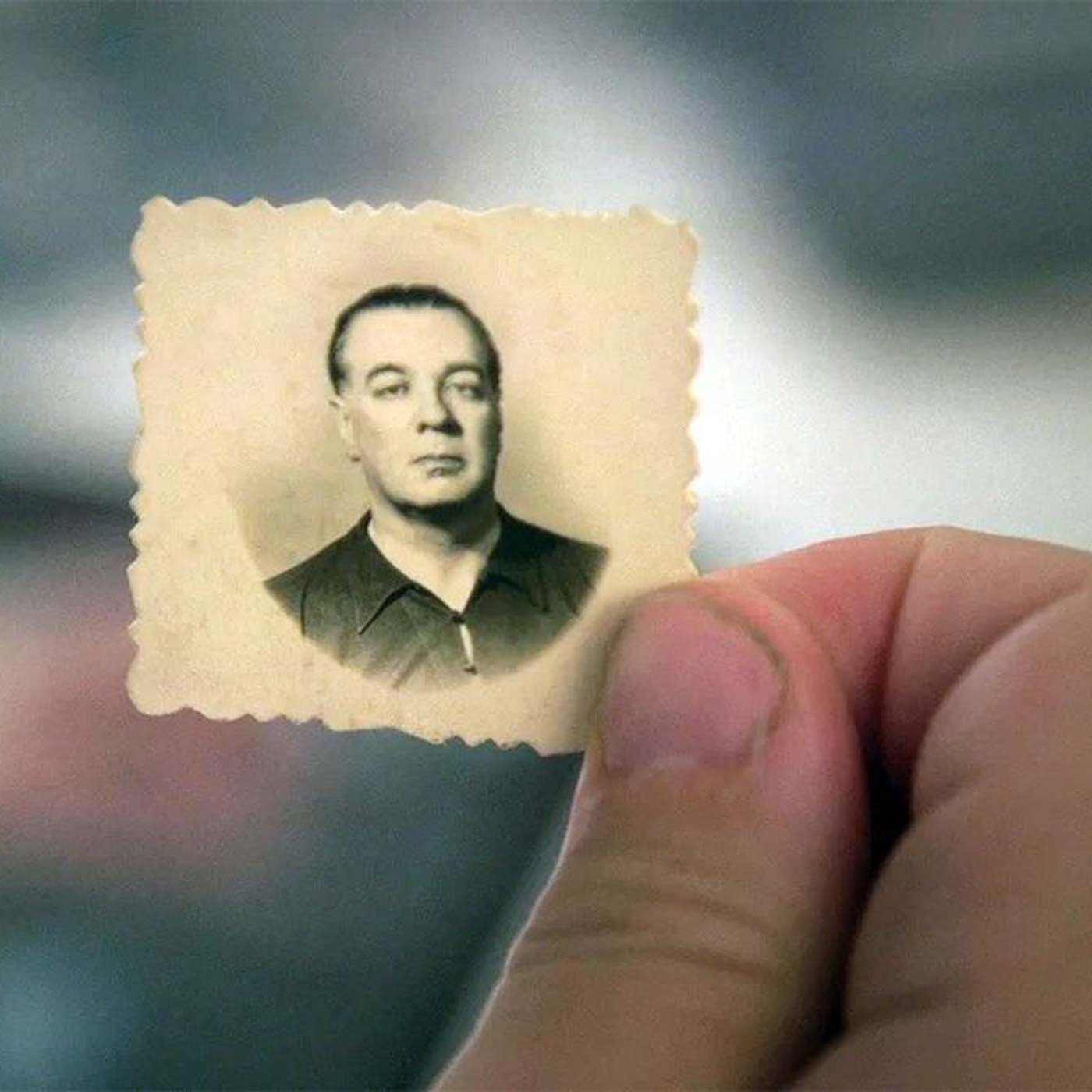
There is something profoundly Borgesian about the way Mariano Llinás searches for Jorge Luis Borges. The investigation begins with documents, objects, manuscripts, photographs, testimonies, and memories, but it soon takes the form of a drift: one clue leads to another, a name opens up a story, a story leads to a place, and that place sets the investigation in motion once again. Borges appears behind every discovery, and life becomes a network of correspondences. Perhaps Llinás could not approach Borges, his idol, in any other way. Borges’s literature turned investigation into a narrative form, and his stories are populated by libraries, detectives, encyclopedias, manuscripts, translators, apocryphal writers, and nonexistent books. In Biography of Jorge Luis Borges, that logic moves into cinema, and the investigative process becomes the very structure of the film: Llinás films Borges as if he were entering one of his stories. This is one of the film’s great virtues: finding a cinematic form that not only tells Borges’s life, but seems to emerge from the very logic of his literature.
The presence of Ernesto Montequín heightens this detective-like dimension. The two of them go through archives, review materials, reconstruct episodes, and follow the traces Borges left throughout his life, while the viewer accompanies them from a similar position, compelled to observe, listen, and connect the dots. But the investigation is constantly permeated by Llinás’s humor, which functions as a fundamental narrative tool. The absurd digressions, unexpected situations, conversations, offhand remarks, and a certain lightness in the face of the subject’s solemnity prevent the film from becoming trapped beneath the monumental weight of Borges. Humor allows the investigation to breathe while simultaneously revealing the personality of the person conducting it. Llinás begins to resemble the writer he is investigating in the way he turns an intellectual quest into a territory of adventures, associations, and detours. Borges’s influence on his cinema is too important to remain outside the film: it emerges in his fascination with documents, in the narrative ramifications, and in his belief that one story can contain another until it produces an entire universe. Extraordinary Stories had already found its own cinematic form through accumulation, digression, and the multiplication of stories, while The Flower took that pursuit toward an even greater dimension. Now the object of that expansion is Borges himself, and the result has something of a self-portrait: Llinás films the writer who helped shape his own sensibility and, in doing so, reveals what he is looking for in him.
Every journey through a book, a library, or an episode in Borges’s life contains a perspective on literature and on the Argentine tradition Llinás inherited. At the heart of the project is a writer attempting to reconstruct another writer who has already become part of his own biography. This autobiographical dimension also emerges in the moments when Llinás steps away from the archive and allows himself to be seen: filming with friends, talking, traveling, sharing everyday situations, or simply becoming part of the circumstances surrounding the investigation. These moments quietly shift the film from Borges’s biography toward that of its own author. Llinás does not need to explain very much about who he is for his presence to become evident: it is there in the way he films, in his humor, in the relationships he establishes with those who accompany him, and in the way he transforms an investigation into someone else into a personal experience. The operation is especially fitting in the case of Borges, whose literature was obsessed with his predecessors, with the libraries he had inherited, and with the way each author transforms the tradition they receive. Llinás now returns that gesture: he takes Borges as a figure from the past and rewrites him from the present, using cinema as a new form of reading. The archive occupies a central place in this operation. Handwriting, a photograph, a letter, an everyday object, or a book marked by Borges acquire a particular intensity because they allow us to imagine the man behind the work. A manuscript lets us see a hand, a photograph allows us to observe a body, a recorded voice lets us hear a breath, and a testimony allows us to reconstruct a relationship. Biography thus becomes a form of archaeology, although each of these traces also reminds us of the distance between a life and what survives of it: the archive preserves fragments, while the person remains inaccessible.
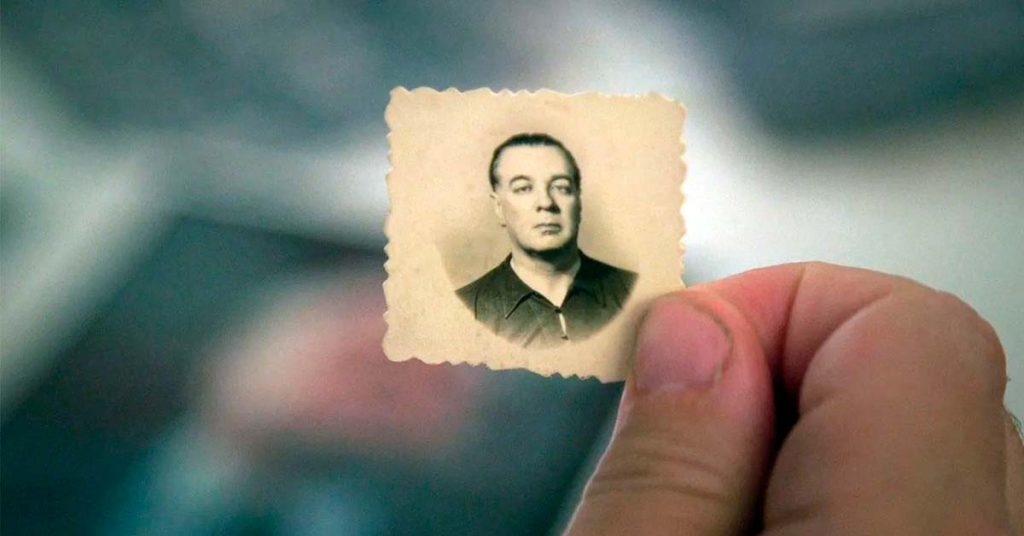
Borges came to be a cultural figure of extraordinary proportions. His name functions as an institution and circulates in association with world literature, the library, the labyrinth, infinity, blindness, and Buenos Aires. His image became independent of his work long ago, and Llinás enters this territory, already burdened with representations, in order to restore its human depth. His habits, decisions, political opinions, and darker sides emerge. Borges held deeply reactionary political positions; he went so far as to publicly defend slavery and maintained for much of his life a perspective that can today be clearly situated on the far right. He also held positions favorable to dictatorships and made statements about Argentina’s military regime that are an unavoidable part of any honest reconstruction of his life. The film incorporates this material, and at certain moments Llinás does something particularly valuable: he questions Borges’s statements, reconstructs the context in which they were made, and leaves open the possibility that the writer knew perfectly well what controversial phrase a particular media outlet was hoping to get from him when they interviewed him. The relationship between Borges and his own public image thus becomes another of the investigation’s enigmas.
But toward the end, something different happens, and this is where the film takes on an unexpectedly personal dimension. Llinás reaches Borges’s final years and argues that, during that period, the writer finally understood the true nature of the dictatorship. The film presents this supposed change almost as a conclusion. Borges, after a lifetime of reactionary positions, would finally have understood. Llinás takes this turn for granted with a certainty that contrasts with the investigative attitude he had maintained toward other statements. He no longer seems to ask what truly led Borges to change, how much was conviction, how much personal evolution, how much opportunism, or how much a retrospective reconstruction of his own image. The investigator gives way to the admirer. And this moment is particularly revealing because Llinás almost unwittingly enters his own labyrinth. For hours, he has pursued Borges’s contradictions, questioned his words, searched for documents, compared testimonies, and allowed the darker areas to remain open. But when he reaches the end of his idol’s life, a need for redemption emerges. Borges would finally have understood. After eighty-five years, he would have reached a kind of moral illumination that allows the narrative to close with a more reconciled figure. There is something almost childlike in this need for the idol to have a happy ending, for the admired man to finally find the right answer and be rescued from what he upheld for much of his life.
Precisely for this reason, the moment makes the film feel more genuine. Llinás’s contradiction does not weaken his investigation: it completes it. His fascination with Borges is exposed at the very moment he attempts to reconstruct him. The filmmaker who spends hours examining documents, distrusting statements, and following clues ends up believing what he needs to believe about the man he has admired since he was young. The film cannot escape Mariano Llinás because it never really had the possibility of doing so.
And that is perhaps its greatest point of interest. Although Llinás explains to the viewer what he is doing, and although Biography of Jorge Luis Borges presents itself as an investigation into the objects of the life of one of the twentieth century’s most important writers, the film is also about the bond between a man and his idol. Borges is the object of the investigation, but Llinás is inevitably its subject. Every decision, every doubt, and even every indulgence reveals something about him. In the end, the film is inhabited by two human beings shaped by their contradictions: Borges, with all the distance between his work and his political positions, and Llinás, with all the distance between the investigator’s lucidity and the admirer’s fascination. The film is, in itself, a form of involuntary honesty. Llinás wants to understand Borges and, in attempting to do so, ends up revealing how much he still needs to believe in him. After five and a half hours of investigation, the labyrinth leads not only toward Borges. It also leads toward the person who chose to walk through it.